Founders Launch Sale — 25% OFF Limited to the first 100 customers Pre-order today to secure launch pricing All pre-orders will ship within 1 week once production and quality verification are complete Founders Launch Sale — 25% OFF Limited to the first 100 customers Pre-order today to secure launch pricing All pre-orders will ship within 1 week once production and quality verification are complete

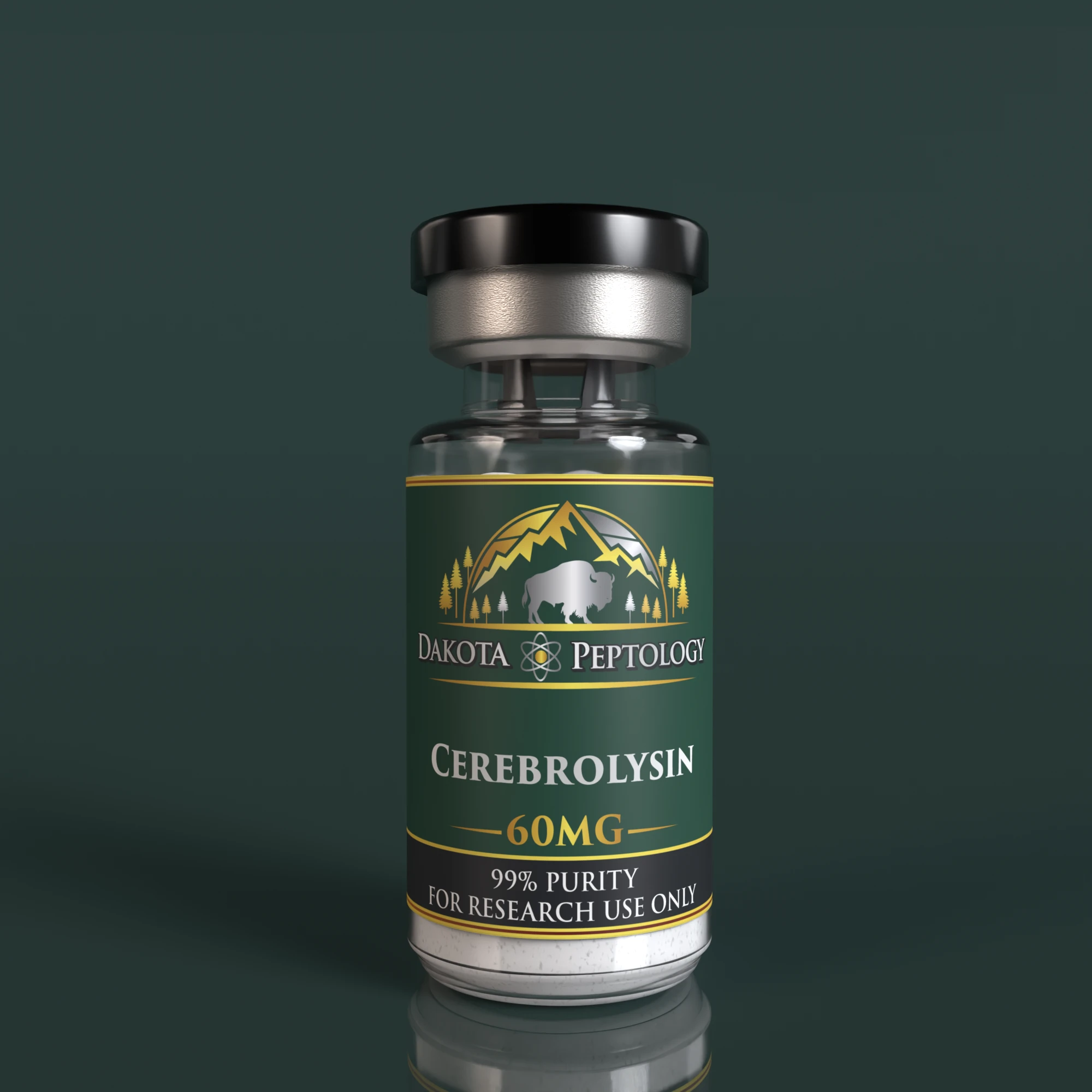
Cerebrolysin 60MG

Cerebrolysin 60MG is a research-use-only peptide derived from conditioned media of brewing yeast cells exposed to neuronal tissues. Designed for laboratory-use context, this product is intended for academic and research investigations related to neuroprotective and cognitive function studies. Always used strictly under the guidance of qualified professionals. For research use only.

$300.00

Satisfaction Guaranteed

Secure
Payment

Third-party
Tested

Research Use Disclaimer

Every serious peptide company prominently displays this. Example Research Use Only All products offered by Dakota Peptology are intended strictly for laboratory research purposes.

Research Use Disclaimer

Every serious peptide company prominently displays this. Example Research Use Only All products offered by TruPeptides are intended strictly for laboratory research purposes.

Cerebrolysin 60MG

Cerebrolysin is a standardized, lyophilized preparation derived from a neuroprotective fraction of bovine brain tissue. This research-use-only peptide solution is used in academic and pharmaceutical research to study neuroprotective mechanisms, cognitive function, and neurodegenerative disease models. The 60mg concentration offers a controlled dosage for experimental applications in neuroscience research.

Research Context

Cerebrolysin has been extensively studied as a potential neuroprotective agent since its original development in the 1970s. As a brain extract peptide mixture, it contains a complex profile of bioactive compounds including peptides, amino acids, and low molecular weight neuroprotective factors. These components work synergistically to modulate cellular processes in the central nervous system. Researchers utilize Cerebrolysin in preclinical models to investigate mechanisms of injury repair, synaptic plasticity, and neuroinflammation.

Research Overview

Cerebrolysin has been evaluated in multiple research contexts including:

  • Neurodegenerative disease modeling
  • Traumatic brain injury studies
  • Ischemic stroke research
  • Alzheimer’s and Parkinson’s disease mechanisms
  • Cognitive impairment studies

Its use in research represents an important tool for studying neuroprotective pathways and potential therapeutic interventions at the molecular level. The specific 60mg concentration used in these studies provides a defined experimental dose for reproducible research applications.

Key Research Focus Areas

  • Neuroinflammation modulation: Evaluation of Cerebrolysin’s effects on microglial activation and inflammatory cytokine profiles in CNS injury models.
  • Synaptic plasticity: Assessment of its role in dendritic spine formation and long-term potentiation (LTP) studies.
  • Neurogenesis support: Investigation of its effects on adult neurogenesis in hippocampal regions.
  • Blood-brain barrier integrity: Examination of potential effects on BBB permeability and transport mechanisms.
  • Protein synthesis regulation: Analysis of mRNA translation and protein expression changes in neuronal cells.

Cerebrolysin’s research applications are limited to academic and pharmaceutical research settings only. It is not intended for any therapeutic, diagnostic, or cosmetic purposes.

Important Disclaimers

This product is intended solely for research purposes and should be handled with proper biosafety precautions. Research institutions must ensure compliance with all applicable regulations governing research materials. Researchers should conduct all experiments in accordance with institutional guidelines and ethical standards.

For research use only. Not for human or animal consumption.

📚 Peer-Reviewed Study

Cerebrolysin and Acute Ischemic Stroke: Evaluation of Neuroprotective Effects and Clinical Outcomes

Introduction to Cerebrolysin

Cerebrolysin is a peptide-based compound composed of low-molecular-weight peptides and amino acids derived from porcine brain tissue.

It has been studied for its potential neuroprotective and neurotrophic effects, particularly in neurological conditions such as stroke and brain injury.

Research Objective

The referenced study aimed to assess the benefits and risks of Cerebrolysin in patients with acute ischemic stroke.

Researchers evaluated whether treatment could improve survival, reduce complications, and enhance neurological recovery.

Study Design and Methodology

This study is a Cochrane systematic review of randomized controlled trials involving Cerebrolysin treatment initiated within 48 hours of stroke onset.

A total of seven clinical trials involving over 1,700 participants were analyzed, comparing Cerebrolysin with placebo or standard care.

Key Findings — Limited Clinical Benefit

The analysis found that Cerebrolysin likely has little to no effect on reducing all-cause mortality in acute ischemic stroke.

Additionally, there was no clear improvement in major clinical outcomes, and some data suggested an increase in non-fatal adverse events in treated groups.

Mechanisms of Action

Cerebrolysin is believed to act through neurotrophic and neuroprotective mechanisms, supporting neuronal survival and synaptic plasticity.

Its peptide components may mimic endogenous growth factors involved in brain repair and cellular signaling.

Implications for Neurological Research

While Cerebrolysin demonstrates biological activity related to neuroprotection, current clinical evidence remains inconclusive regarding its effectiveness in stroke outcomes.

These findings highlight the need for further high-quality trials to determine its role in neurological recovery.

Conclusion

Cerebrolysin has been widely studied as a neuroprotective peptide mixture, but current evidence suggests limited clinical benefit in acute ischemic stroke.

Continued research is required to better understand its mechanisms and potential applications.

Frequently Asked Questions (FAQ)

What is Cerebrolysin?

It is a mixture of peptides derived from porcine brain tissue, studied for neuroprotective properties.

What does Cerebrolysin do?

It is believed to support neuronal survival and brain repair through neurotrophic signaling pathways.

What did the study show?

The study found no significant reduction in mortality and limited evidence of clinical benefit in stroke patients.

Are there risks?

Some evidence suggests an increase in non-fatal adverse events, though overall safety findings are mixed.

Is this based on human research?

Yes, this analysis includes randomized controlled trials conducted in human patients.

📚 Study Reference
Ziganshina L.E. et al. Cochrane Database Syst Rev. 2023.


https://pubmed.ncbi.nlm.nih.gov/37818733/

Date Added :
05/18/2026

Related Peptides

Age Verification!

*By continuing, you confirm eligibility and legal compliance.