Founders Launch Sale — 25% OFF
Limited to the first 100 customers
Pre-order today to secure launch pricing
All pre-orders will ship within 1 week once production and quality verification are complete
Founders Launch Sale — 25% OFF
Limited to the first 100 customers
Pre-order today to secure launch pricing
All pre-orders will ship within 1 week once production and quality verification are complete
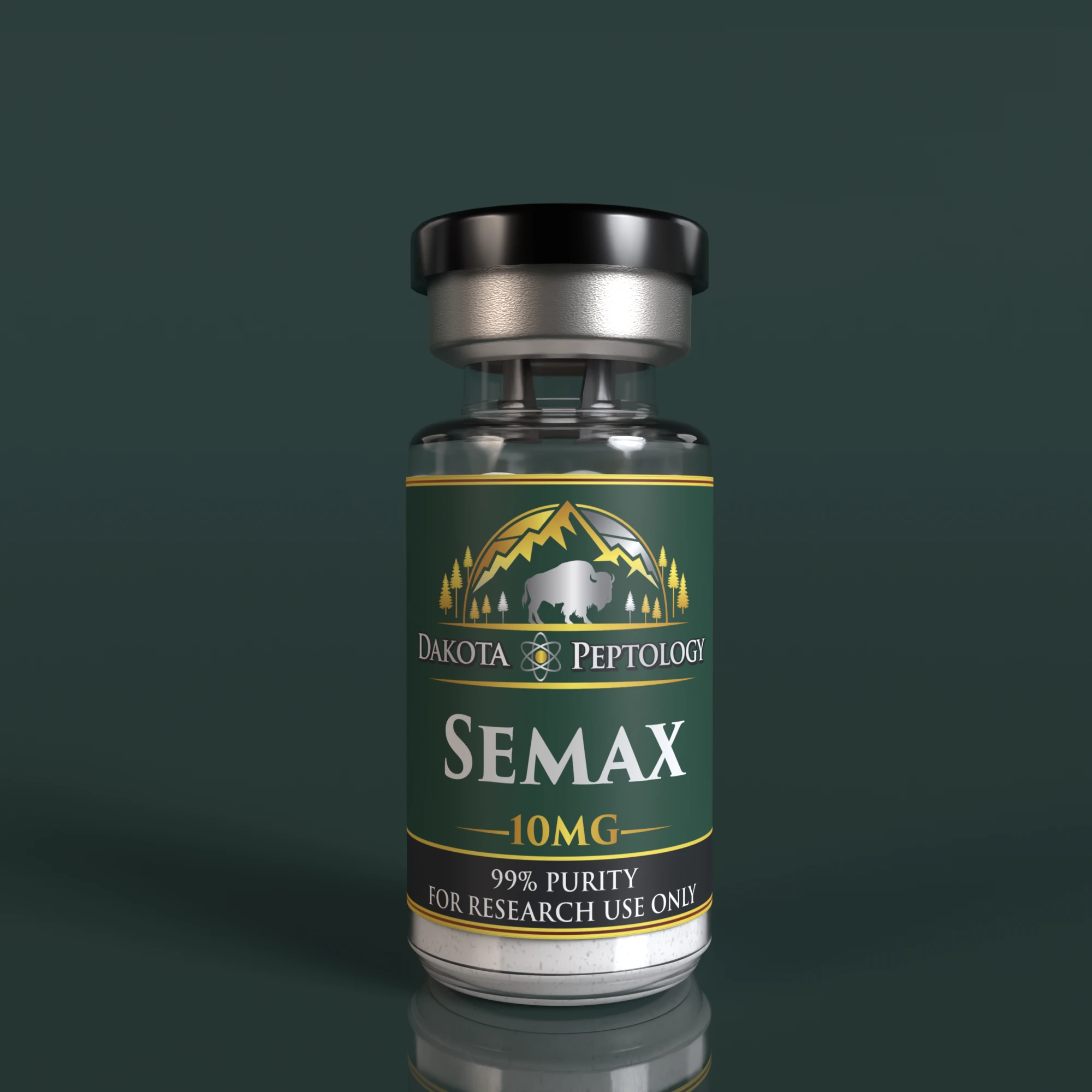
Semax is a research-use-only peptide designed for laboratory and academic study. This 10-mg formulation is under investigation for its potential neuroprotective and cognitive enhancement properties in controlled experimental settings. For research use only.
$40.00
Satisfaction
Guaranteed
Secure
Payment
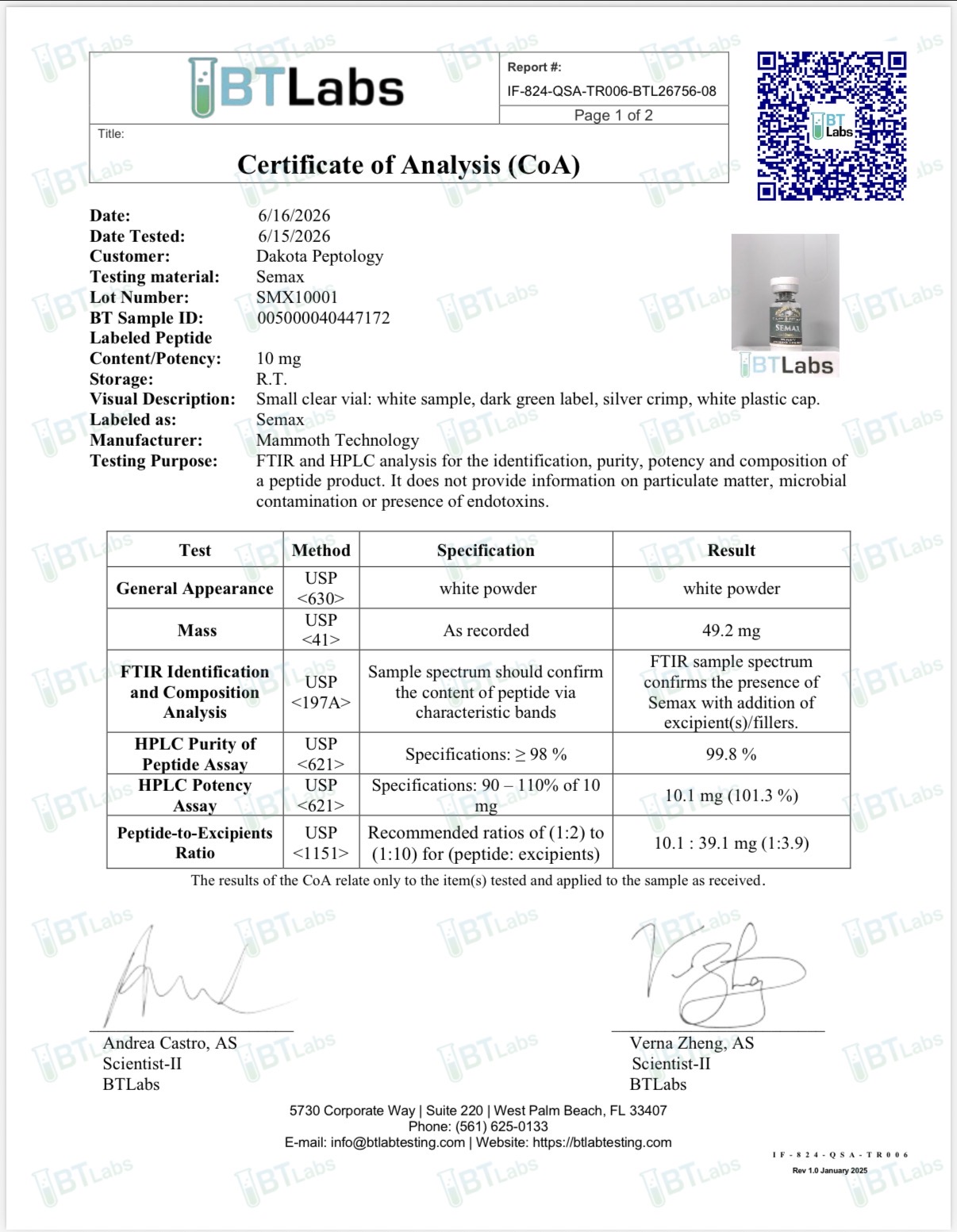
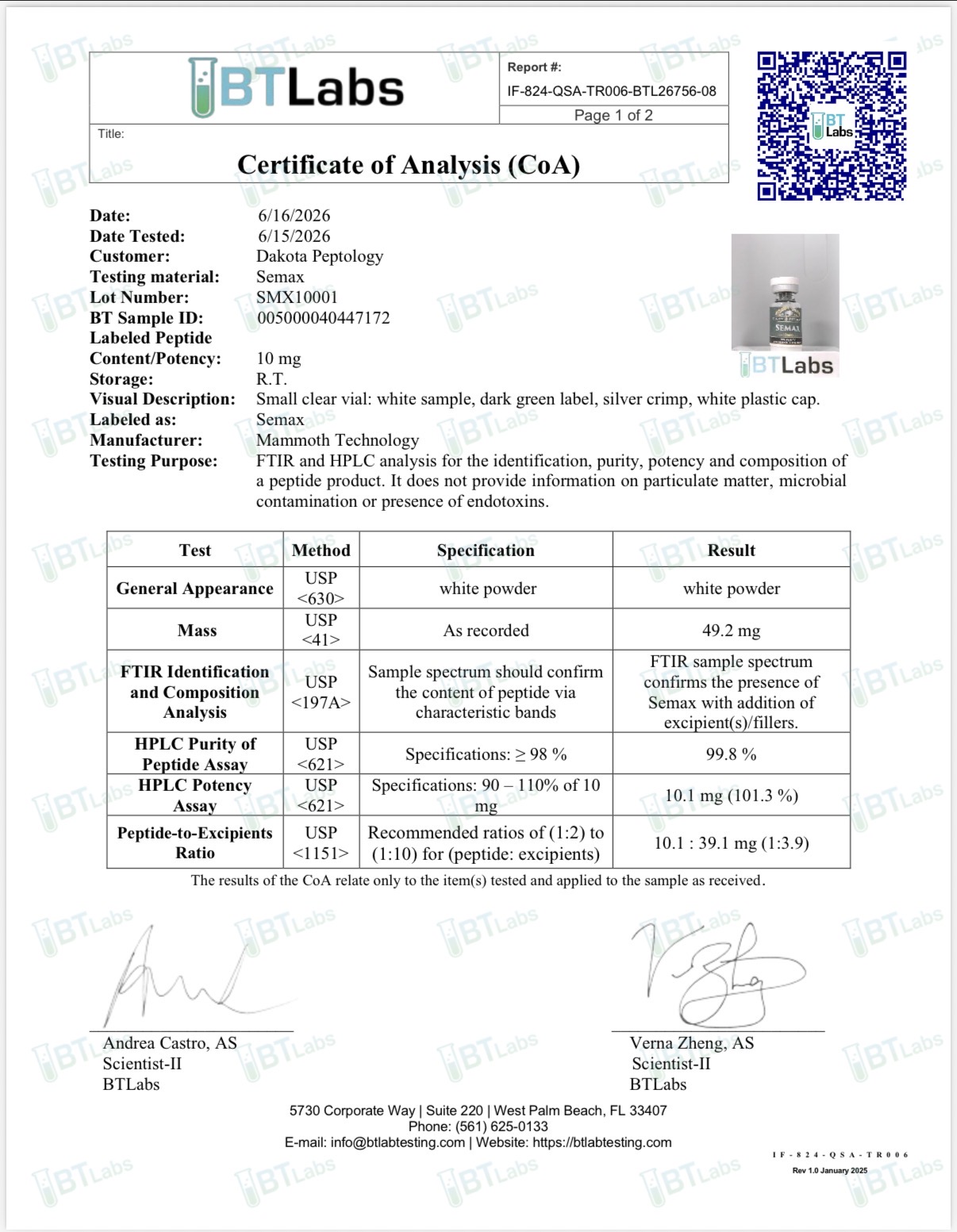
Third-party
Tested
Research Use Disclaimer
Every serious peptide company prominently displays this. Example Research Use Only All products offered by Dakota Peptology are intended strictly for laboratory research purposes.
Research Use Disclaimer
Every serious peptide company prominently displays this. Example Research Use Only All products offered by TruPeptides are intended strictly for laboratory research purposes.
‘
Semax (10 MG)
Semax is a synthetic derivative of D-aspartic acid methyl ester, originally developed for its potential cognitive and neuroprotective properties within academic and scientific research environments. This product is intended solely for research purposes and is not intended for therapeutic, human, or animal consumption.
Research Context
Semax has been investigated in preclinical studies for its ability to modulate signaling pathways associated with cognitive enhancement, neuroplasticity, and potential benefits in neurodegenerative conditions. Due to its short half-life and rapid metabolism, research focuses primarily on its acute effects rather than sustained therapeutic outcomes.
Research Overview
Semax is synthesized to interact with intracellular pathways, particularly those involving cyclic AMP (cAMP) and protein kinase A (PKA), which may contribute to improvements in mental clarity, focus, and potential cognitive performance under controlled research conditions. Initial studies have suggested potential neuroprotective effects, though findings are preliminary and limited to in vitro and animal models.
Key Research Focus Areas
Cognitive Enhancement: Investigated for its role in modulating synaptic plasticity and memory-related pathways, primarily in animal and cellular studies.
Neuroprotective Effects: Explored in models of neurodegeneration, though results are not yet conclusive for therapeutic applications.
Acute Metabolic and Endocrine Effects: Research has examined its short-term effects on glucose metabolism and energy regulation, particularly in controlled laboratory settings.
Behavioral and Performance Studies: Preliminary observations in experimental settings suggest potential improvements in learning and motor function, though human trials are not yet available.
Important Safety and Compliance Notice
This product is intended exclusively for research institutions, academic laboratories, and authorized researchers adhering to institutional protocols. It is not authorized for human or animal consumption and is subject to strict regulatory oversight. Users must comply with all applicable laws and guidelines governing the handling and use of research chemicals.
For research use only. Not for human or animal consumption.
📚 Peer-Reviewed Study
Semax Peptide and Neuroprotection: Effects on Functional Recovery and Oxidative Stress Regulation
▼
Introduction to Semax
Semax is a synthetic heptapeptide derived from a fragment of adrenocorticotropic hormone (ACTH 4–7) with an added Pro-Gly-Pro sequence for stability.
It has been studied for its neuroprotective, cognitive, and regulatory effects on the central nervous system.
Research Objective
The referenced study aimed to investigate how Semax influences recovery following spinal cord injury and its role in regulating cellular stress pathways.
Researchers focused on its interaction with molecular signaling mechanisms involved in neuronal survival and repair.
Study Design and Methodology
A spinal cord injury model was developed in mice, and Semax was administered to evaluate functional recovery and cellular response.
Analysis included behavioral testing, molecular assays, gene expression profiling, and imaging techniques to assess neuroinflammation and tissue repair.
Key Findings — Functional Recovery and Neuroprotection
Semax significantly improved functional recovery following spinal cord injury and reduced neuronal damage.
It was shown to decrease oxidative stress and inhibit inflammatory cell death pathways, supporting improved neurological outcomes. :contentReference[oaicite:1]{index=1}
Mechanisms of Action
Semax modulates key molecular pathways by interacting with the μ-opioid receptor and regulating ubiquitination processes.
It also reduces lysosomal membrane damage and oxidative stress, contributing to neuronal survival and repair mechanisms. :contentReference[oaicite:2]{index=2}
Implications for Neuroregenerative Research
These findings highlight Semax as a significant peptide in research focused on neuroprotection, neural repair, and recovery following injury.
Its ability to regulate multiple cellular pathways makes it a key compound in studies of central nervous system resilience.
Conclusion
Semax demonstrated strong neuroprotective effects and improved functional outcomes in preclinical models of spinal cord injury.
These results support further investigation into its role in neurological recovery and neuroregulation.
Frequently Asked Questions (FAQ)
What is Semax?
Semax is a synthetic peptide derived from ACTH, studied for neuroprotective and cognitive-related effects.
What does Semax do?
It supports neuronal survival, reduces oxidative stress, and promotes recovery in neurological research models.
What did the study show?
The study showed improved functional recovery and reduced neuroinflammation following injury.
How does Semax work?
It interacts with molecular pathways related to oxidative stress, inflammation, and protein regulation in neurons.
Is this based on human studies?
The referenced findings are based on preclinical animal models and should be interpreted in a research context.
📚 Study Reference
Liu R. et al. Br J Pharmacol. 2025;182(22):5489-5516.