Founders Launch Sale — 25% OFF Limited to the first 100 customers Pre-order today to secure launch pricing All pre-orders will ship within 1 week once production and quality verification are complete Founders Launch Sale — 25% OFF Limited to the first 100 customers Pre-order today to secure launch pricing All pre-orders will ship within 1 week once production and quality verification are complete

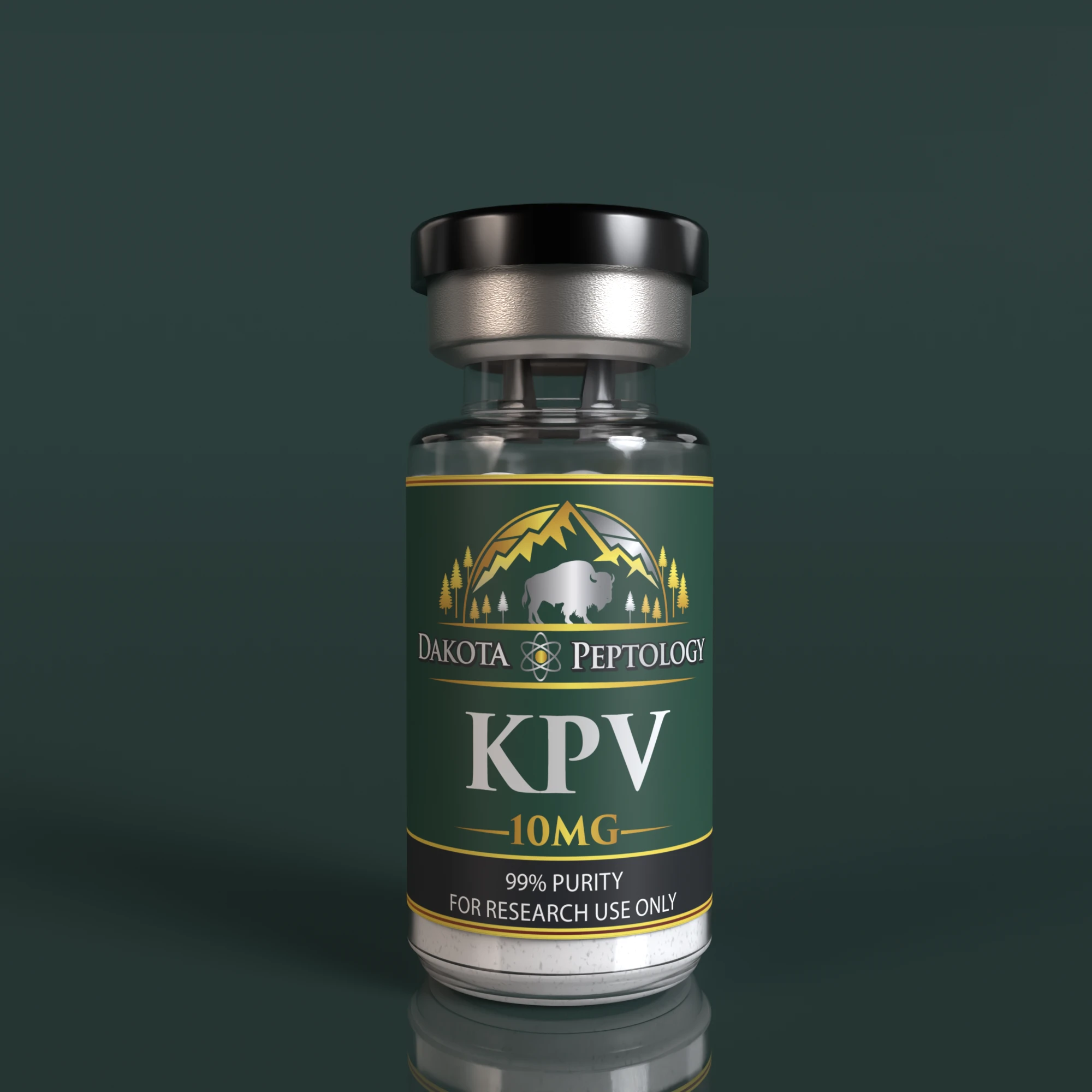
KPV is a research-use-only peptide designed for laboratory applications. This 10 mg formulation is intended for in-depth biochemical and pharmacological studies only. It is not intended for human or veterinary use. For research use only.

$90.00

Satisfaction Guaranteed

Secure
Payment

Third-party
Tested

Research Use Disclaimer

Every serious peptide company prominently displays this. Example Research Use Only All products offered by Dakota Peptology are intended strictly for laboratory research purposes.

Research Use Disclaimer

Every serious peptide company prominently displays this. Example Research Use Only All products offered by TruPeptides are intended strictly for laboratory research purposes.


KPV Peptide (10mg)

The KPV peptide (Lys-Pro-Val) is a synthetic decapeptide derived from the amino acid sequence found in the Candida albicans cell wall. Within the research community, it is primarily studied for its potential immunomodulatory and anti-inflammatory properties, though its mechanisms and applications remain under investigation. This product is intended solely for academic and scientific research purposes, not for therapeutic, diagnostic, or cosmetic evaluation.

Research Context

The KPV peptide has gained interest in the scientific literature for its ability to modulate immune cell responses, particularly in studies involving fungal infections and inflammatory pathways. Its structure allows for potential interaction with immune receptors, though its precise functional effects are still the subject of ongoing research. Due to its minimal size and structural simplicity, KPV is often used as a model compound for studying peptide-mediated immune modulation.

Research Overview

Initial investigations into KPV have focused on its role in in vitro and in vivo models of immune response regulation. Research has explored its effects on cytokine production, macrophage activation, and fungal pathogen interactions, particularly in the context of Candida albicans infections. While anecdotal reports and preliminary studies suggest potential anti-inflammatory and antimicrobial properties, no definitive clinical applications have been established as of current knowledge.

Key Research Focus Areas

  • Immunomodulation: Exploration of KPV’s effects on immune receptor signaling, including its potential role in modulating cytokine release and immune cell activation.
  • Antimicrobial Activity: Investigations into its interactions with fungal pathogens, particularly in Candida albicans models, which may reveal broader antimicrobial mechanisms.
  • Inflammatory Pathways: Analysis of KPV’s impact on inflammatory responses, including its potential to attenuate excessive immune activation in experimental settings.
  • Peptide Stability and Bioavailability: Studies assessing KPV’s structural integrity, metabolic stability, and potential bioavailability in different biological matrices.

Safety and Compliance

This product is provided for research-use-only applications and is not intended for human or animal consumption. Users are responsible for adhering to all applicable regulatory requirements governing research materials, including proper documentation, labeling, and disposal procedures. Users must ensure compliance with all local, national, and international laws and standards applicable to research substances.

For research use only. Not for human or animal consumption.

📚 Peer-Reviewed Study

KPV (Lys-Pro-Val) and Gut Barrier Restoration: Effects on Inflammation and Mucosal Healing

Introduction to KPV

KPV (Lysine-Proline-Valine) is a naturally occurring tripeptide derived from the C-terminal region of alpha-melanocyte-stimulating hormone (α-MSH).

It represents the minimal sequence responsible for many of α-MSH’s anti-inflammatory effects, without activating melanocortin-related pigmentation pathways.
Research Objective

The referenced study aimed to evaluate the anti-inflammatory and mucosal repair effects of KPV in models of ulcerative colitis.

Researchers investigated whether improved delivery of KPV could enhance its stability and therapeutic impact on intestinal inflammation.

Study Design and Methodology

In this study, KPV was incorporated into a double-network hydrogel system designed to adhere to inflamed colonic tissue.

The formulation was tested in animal models of chemically induced colitis, with evaluation of mucosal healing, inflammation, and gut microbiota changes.

Key Findings — Anti-Inflammatory and Barrier Repair Effects

KPV demonstrated significant anti-inflammatory effects, reducing intestinal damage and improving mucosal barrier integrity in colitis models.

The hydrogel delivery system enhanced KPV stability and retention, leading to improved therapeutic outcomes and restoration of epithelial structure.

Mechanisms of Action

KPV exerts anti-inflammatory effects by modulating cytokine signaling and reducing oxidative stress in inflamed tissues.

It also supports epithelial repair and helps restore gut barrier integrity, contributing to improved intestinal homeostasis.

Implications for Inflammatory Research

These findings highlight KPV as a promising peptide in research focused on inflammatory bowel conditions and epithelial barrier dysfunction.

Its small size and stability make it suitable for targeted delivery systems and localized therapeutic applications.

Conclusion

KPV demonstrated strong anti-inflammatory and mucosal healing effects in preclinical models of intestinal inflammation.

These results support continued investigation into its role in gut health, epithelial repair, and inflammatory disease research.

Frequently Asked Questions (FAQ)

What is KPV?

KPV is a tripeptide (Lys-Pro-Val) derived from alpha-MSH with anti-inflammatory properties.

What does KPV do?

It reduces inflammation, supports epithelial repair, and helps maintain tissue integrity in research models.

What was observed in the study?

The study showed reduced intestinal inflammation and improved mucosal barrier recovery in treated models.

How is KPV delivered in research?

It can be delivered using advanced systems such as hydrogels to improve stability and tissue targeting.

Is this based on human studies?

The referenced findings are based on preclinical models and should be interpreted within a research context.

📚 Study Reference
Zhao Y. et al. Acta Biomater. 2022;143:233-252.


https://pubmed.ncbi.nlm.nih.gov/35245681/

Date Added :
05/18/2026

Related Peptides

Age Verification!

*By continuing, you confirm eligibility and legal compliance.