
Tesamorelin is a synthetic analogue of growth hormone-releasing hormone (GHRH) that stimulates endogenous growth hormone production.
Growth hormone plays a central role in regulating fat metabolism, muscle preservation, and overall body composition.
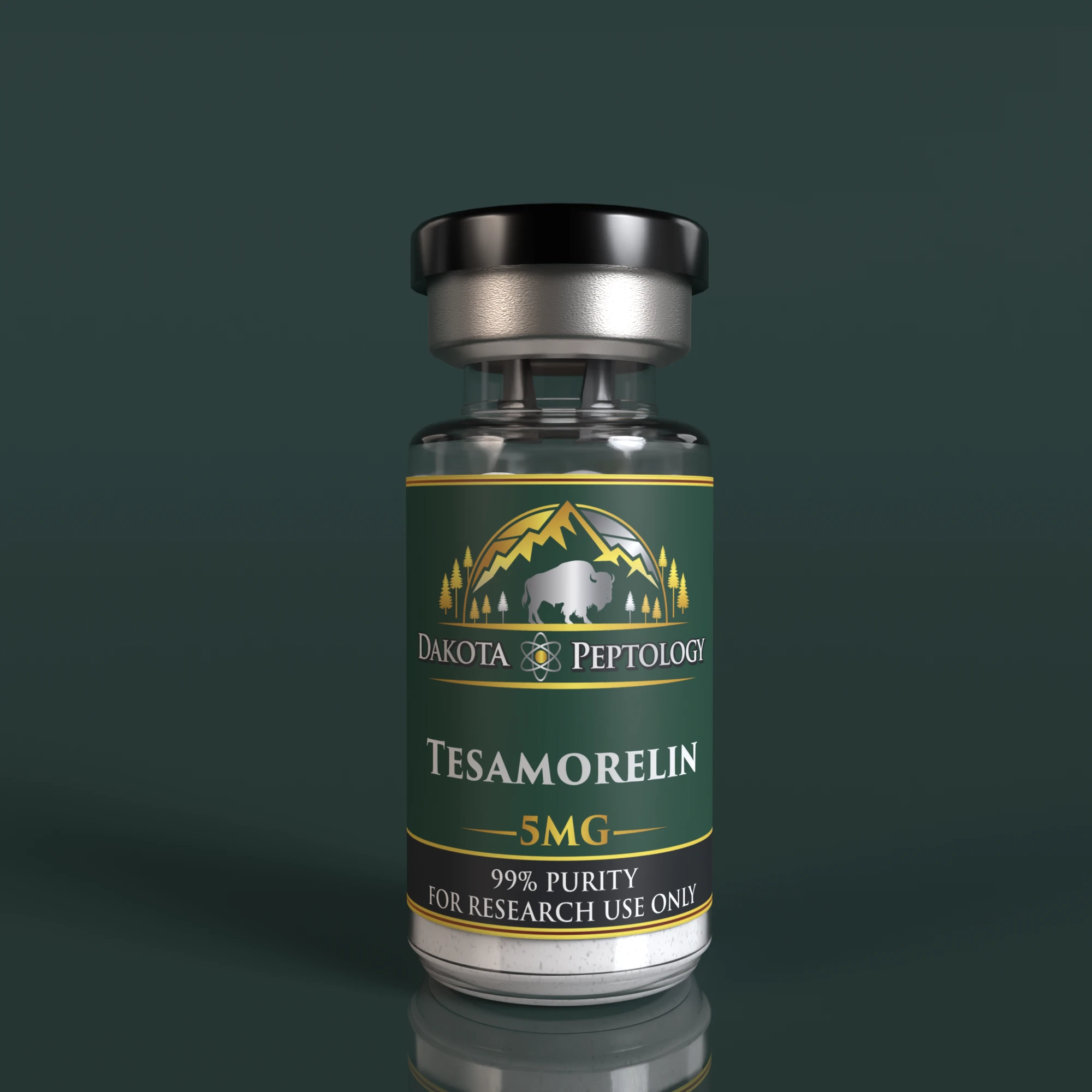
Tesamorelin is a selective ghrelin receptor agonist, designed for laboratory research. This peptide modulates growth hormone secretion, offering insights into metabolic and endocrinology studies. For research use only.
$119.95 – $199.95Price range: $119.95 through $199.95
Every serious peptide company prominently displays this. Example Research Use Only All products offered by Dakota Peptology are intended strictly for laboratory research purposes.
Every serious peptide company prominently displays this. Example Research Use Only All products offered by TruPeptides are intended strictly for laboratory research purposes.
Tesamorelin is a synthetic peptide derived from growth hormone-releasing hormone (GHRH). It is being investigated in preclinical and early-phase clinical research for its potential effects on muscle and fat metabolism, particularly in conditions where endogenous growth hormone signaling may be compromised. This compound is not approved for human or veterinary use and is strictly designated for research purposes only.
Tesamorelin has gained attention in scientific research due to its ability to selectively enhance lipolytic (fat breakdown) and anabolic (muscle-building) effects while sparing the growth-promoting properties of growth hormone. Originally developed to study its effects on lipid metabolism, it has been explored in contexts such as obesity, muscle wasting, and metabolic dysregulation. Due to its potential mechanisms, it is often studied alongside other growth hormone-related peptides in research settings.
Tesamorelin acts by selectively stimulating the growth hormone-insensitive lipase (GHISL) pathway, which facilitates lipid mobilization. In preclinical studies, it has shown promise in reducing visceral fat mass and improving metabolic parameters, such as insulin sensitivity, in animal models of obesity and muscle atrophy. However, its exact therapeutic implications in humans remain under investigation, and no clinical applications have been approved to date.
Important Note: Tesamorelin is intended solely for research use in a controlled academic or institutional setting. It is not authorized for human or animal consumption, and improper administration may pose significant risks. Researchers must comply with all applicable regulatory requirements, including proper documentation, storage, and disposal procedures.
For research use only. Not for human or animal consumption.
Tesamorelin is a synthetic analogue of growth hormone-releasing hormone (GHRH) that stimulates endogenous growth hormone production.
Growth hormone plays a central role in regulating fat metabolism, muscle preservation, and overall body composition.
The objective of this study was to evaluate whether tesamorelin could reduce visceral fat and improve body composition through activation of growth hormone pathways.
Researchers also examined changes in metabolic markers and fat distribution.
A randomized, controlled clinical study evaluated tesamorelin over a defined treatment period with consistent monitoring.
Key measurements included visceral fat levels, waist circumference, lipid markers, and IGF-1 concentrations.
Tesamorelin demonstrated a reduction in visceral adipose tissue, indicating targeted fat loss effects.
Improvements in abdominal fat distribution were observed, supporting its role in body composition research.
Treatment was associated with increased IGF-1 levels and improved lipid profiles, including reductions in triglycerides.
These changes suggest enhanced metabolic activity and improved energy utilization.
Tesamorelin stimulates the release of growth hormone, which increases IGF-1 production and promotes lipolysis.
This mechanism supports the breakdown of fat, particularly visceral fat, while helping maintain lean tissue.
Tesamorelin provides a targeted approach to studying fat loss through hormonal regulation rather than direct calorie restriction.
It is widely explored in research focused on metabolic performance, fat distribution, and lean mass preservation.
Tesamorelin demonstrated measurable effects on reducing visceral fat and improving metabolic markers.
These findings support its relevance in body composition and metabolic research studies.
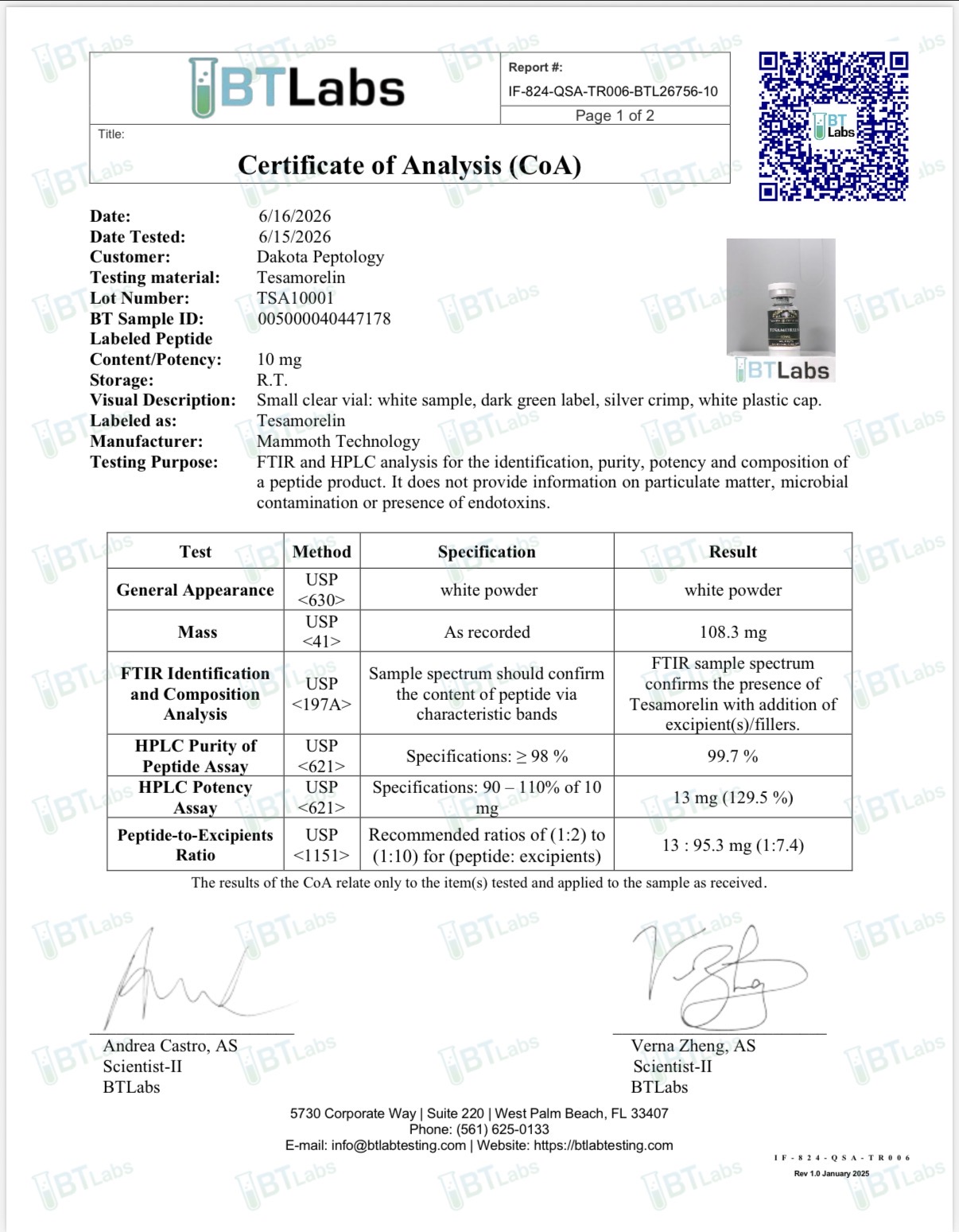
Please select an option to view the COA certificate.

Rooted in the Midwest • Driven by Science