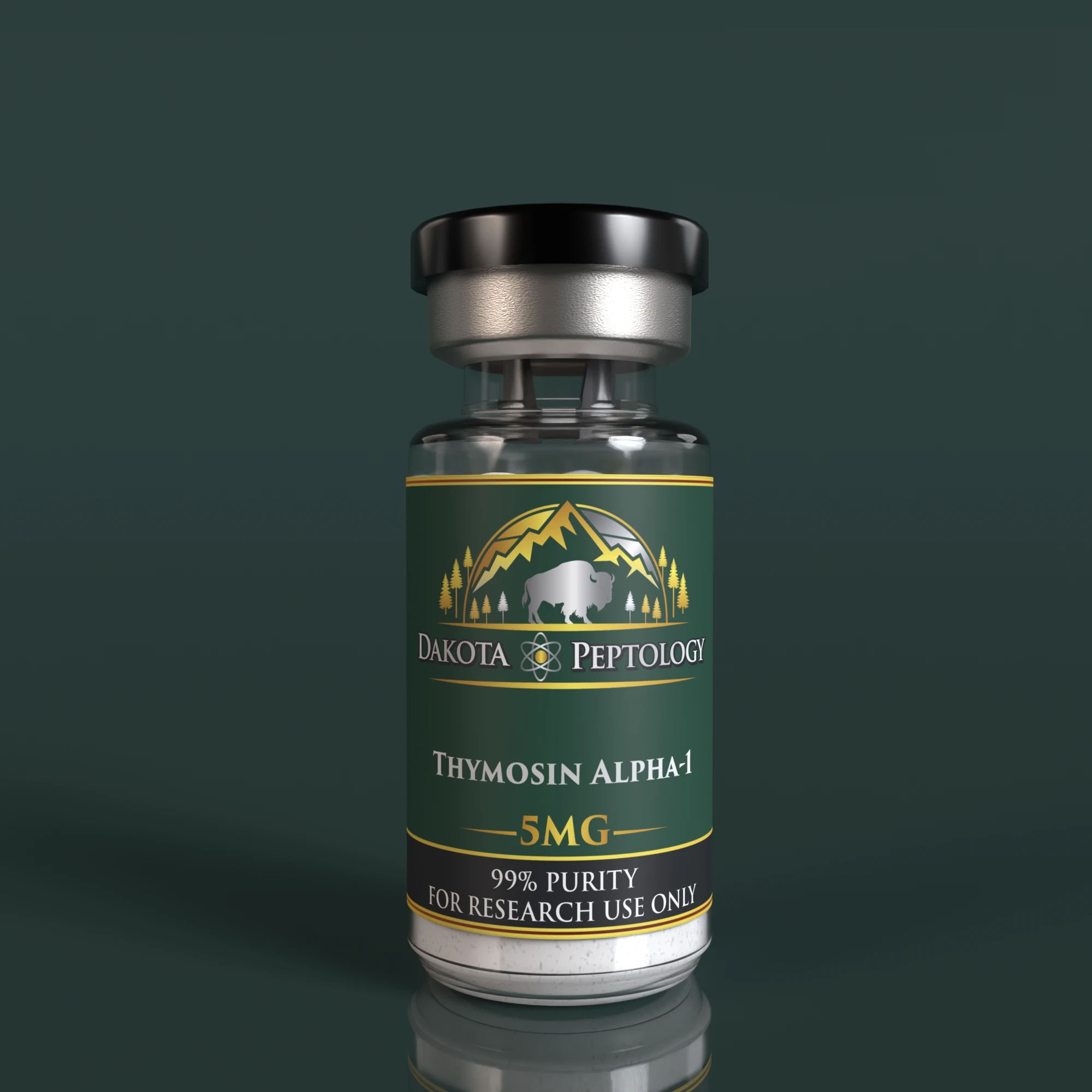
Founders Launch Sale — 25% OFF
Limited to the first 100 customers
Pre-order today to secure launch pricing
All pre-orders will ship within 1 week once production and quality verification are complete
Founders Launch Sale — 25% OFF
Limited to the first 100 customers
Pre-order today to secure launch pricing
All pre-orders will ship within 1 week once production and quality verification are complete
Thymosin Alpha-1 is a research-use-only peptide under laboratory evaluation for its potential immunomodulatory properties. This product is not intended for human or animal therapeutic use and is exclusively for research purposes or academic investigations in controlled settings. Always handle with appropriate safety and compliance measures.
$75.00–$140.00Price range: $75.00 through $140.00
Satisfaction
Guaranteed
Secure
Payment
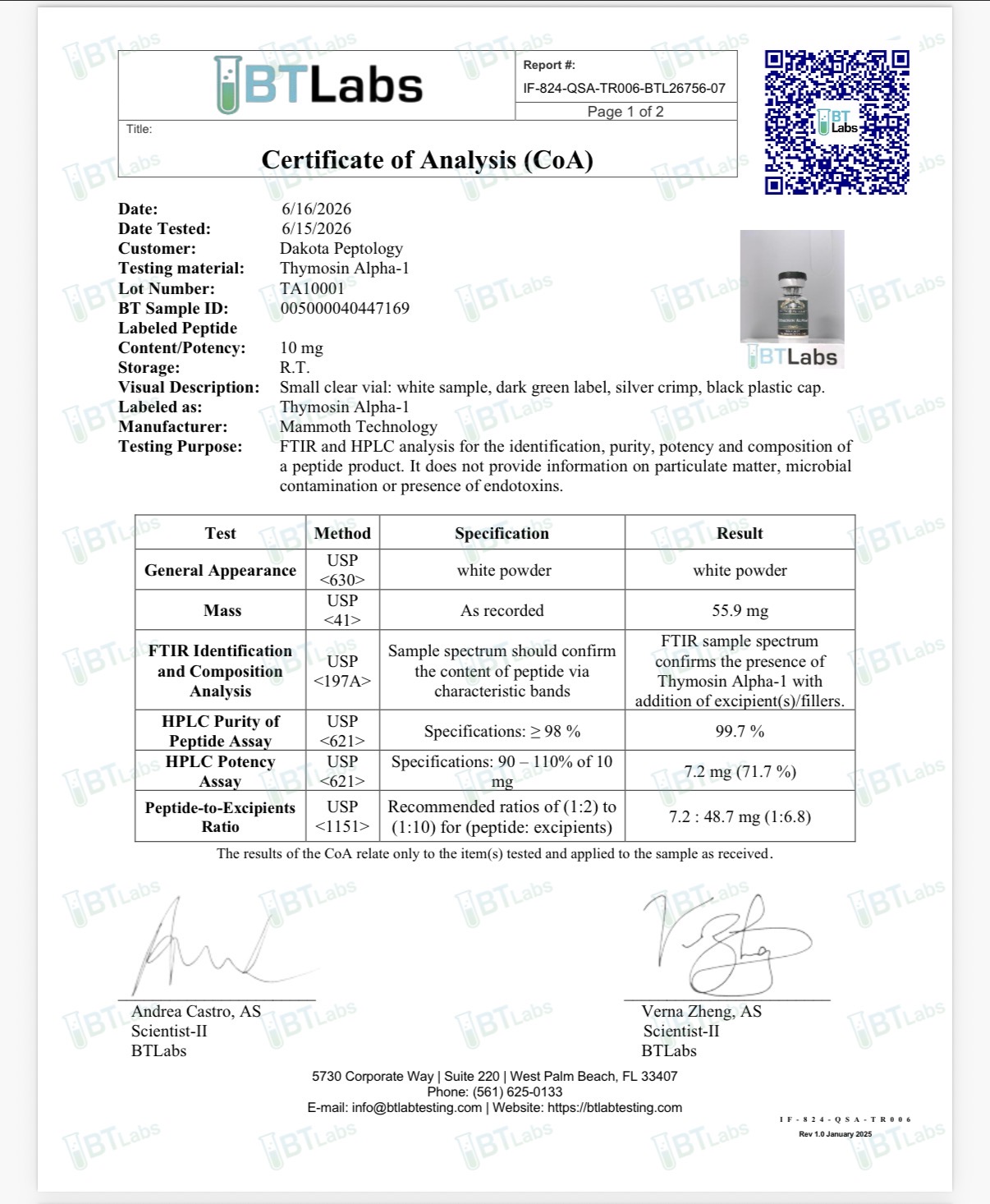
Third-party
Tested
Research Use Disclaimer
Every serious peptide company prominently displays this. Example Research Use Only All products offered by Dakota Peptology are intended strictly for laboratory research purposes.
Research Use Disclaimer
Every serious peptide company prominently displays this. Example Research Use Only All products offered by TruPeptides are intended strictly for laboratory research purposes.
Thymosin Alpha-1 (TA-1) 10MG
Thymosin Alpha-1 is a synthetic peptide derived from the thymosin beta-4 protein, recognized for its potential immunomodulatory and antiviral effects within a controlled research setting. This product is intended for academic, institutional, or scientific investigations only and is designed for use in laboratory environments where strict adherence to safety protocols is maintained.
Research Context
Thymosin Alpha-1 has been extensively studied in preclinical models for its role in modulating immune responses. The peptide is derived from the thymus gland, a primary organ involved in immune system development and function. Research investigations have primarily focused on evaluating its impact on T-cell activation, antiviral activity, and cytokine regulation in experimental settings.
Research Overview
In laboratory research, Thymosin Alpha-1 is often utilized to explore its potential mechanisms of action, such as enhancing antiviral defenses, modulating dendritic cell maturation, and influencing cytotoxic T-cell activity. Studies have demonstrated its utility in preclinical models for examining immune responses to infectious agents, cancer, and inflammatory conditions, although human application remains beyond the scope of this product.
Key Research Focus Areas
Antiviral mechanisms in immune response modulation
T-cell activation and dendritic cell signaling pathways
Investigations into Th1/Th2 balance and immune homeostasis
Potential effects on antiviral peptide production
Preclinical evaluations in infectious disease models
Safety and Compliance
This product is provided for research use only and is not intended for therapeutic, diagnostic, or cosmetic applications. It is critical to adhere to all applicable laboratory safety standards, including proper handling procedures, containment protocols, and disposal practices. Always consult with institutional review boards and comply with regulatory guidelines for research materials, such as those issued by regulatory authorities overseeing academic and institutional research activities.
For research use only. Not for human or animal consumption.

📚 Peer-Reviewed Study
Thymosin Alpha-1 and Immune Regulation: Effects on Inflammation and Infection Outcomes
▼
Introduction to Thymosin Alpha-1
Thymosin Alpha-1 is a naturally occurring 28-amino acid peptide derived from the thymus gland, known for its role in regulating immune function.
It has been extensively studied for its ability to modulate both innate and adaptive immune responses, particularly through activation of T lymphocytes and immune signaling pathways.
Research Objective
The referenced study aimed to evaluate the effects of thymosin alpha-1 on inflammation control and infection outcomes in patients with severe inflammatory conditions.
Researchers focused on its ability to regulate immune responses and reduce complications associated with immune dysregulation.
Study Design and Methodology
This research was conducted as a systematic review and meta-analysis of clinical studies evaluating thymosin alpha-1 treatment.
Outcomes included infection rates, inflammatory markers, and overall clinical progression in treated versus control groups.
Key Findings — Immune Modulation and Infection Reduction
Thymosin alpha-1 was associated with reduced infection rates and improved inflammatory profiles in patients with severe conditions.
The study demonstrated its ability to enhance immune regulation and improve clinical outcomes through modulation of immune responses.
Mechanisms of Action
Thymosin alpha-1 enhances immune function by promoting T-cell differentiation, activating dendritic cells, and regulating cytokine production.
It also interacts with toll-like receptor pathways, contributing to balanced immune activation and prevention of excessive inflammation.
Implications for Immunological Research
These findings support thymosin alpha-1 as a key immunomodulatory peptide with applications in infectious disease research and immune dysfunction.
Its ability to regulate immune balance rather than simply stimulate it makes it a unique focus in immunological studies.
Conclusion
Thymosin alpha-1 demonstrated significant effects on immune regulation and infection control in clinical research settings.
These results highlight its importance in ongoing studies related to inflammation, immunity, and disease outcomes.
Frequently Asked Questions (FAQ)
What is Thymosin Alpha-1?
It is a thymus-derived peptide that plays a central role in regulating immune system activity.
What does it do?
It modulates immune responses by enhancing T-cell function and balancing inflammatory signaling.
What did the study show?
The study showed reduced infection rates and improved immune regulation in treated groups.
Is it immune boosting?
It is better described as immune-modulating, helping balance both underactive and overactive immune responses.
Is this based on human research?
Yes, the referenced study includes clinical data analyzed across multiple human studies.