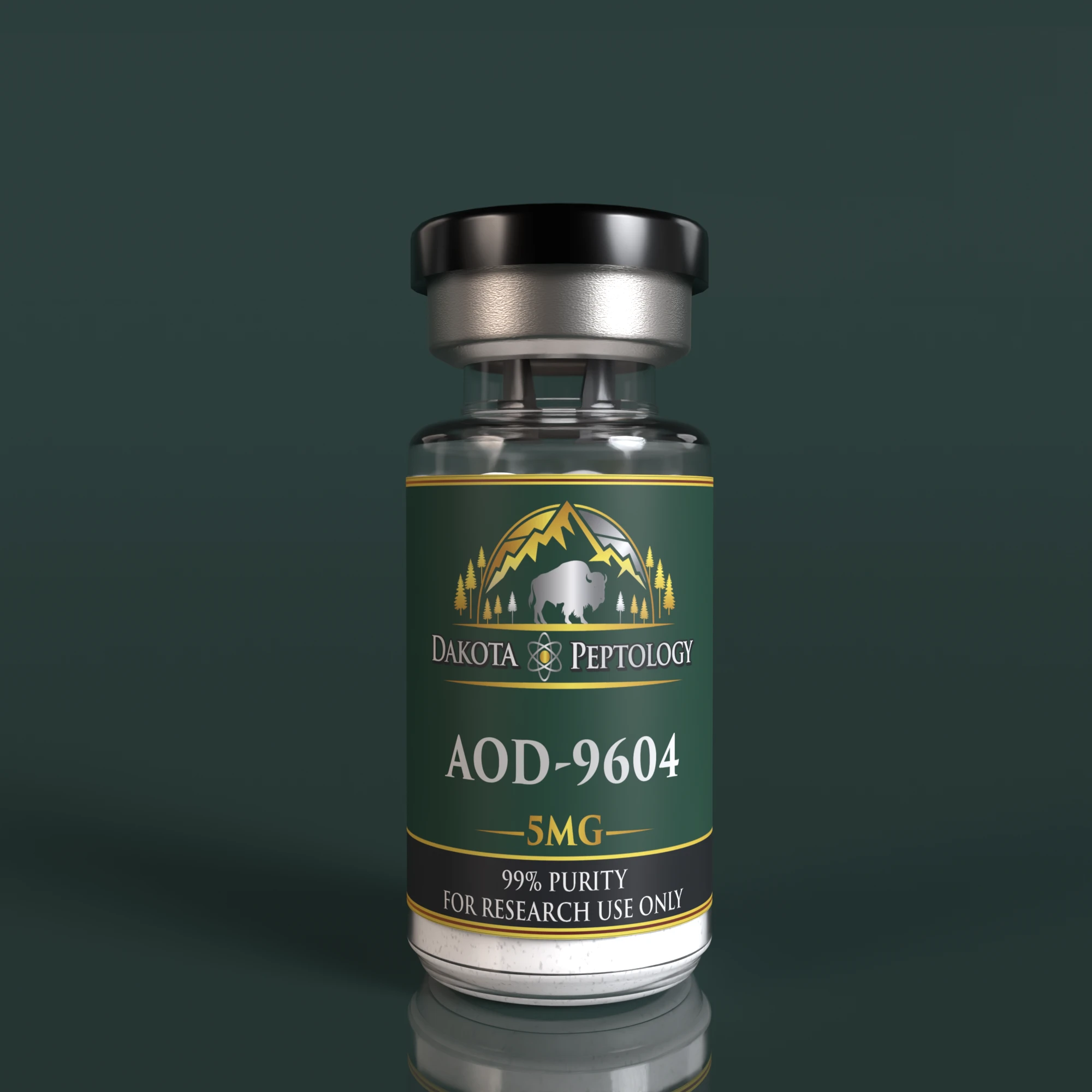
AOD-9604 5MG
AOD-9604 5MG is a synthetic peptide fragment derived from the C-terminal region of human growth hormone (hGH), specifically engineered for research involving metabolic regulation, lipid metabolism, and adipose tissue signaling pathways. This peptide has attracted scientific interest due to its selective activity associated with fat metabolism without exhibiting the broader growth-promoting properties commonly linked to full-length growth hormone compounds.
Its stability and targeted biological profile make AOD-9604 a valuable component in experimental models investigating obesity mechanisms, energy expenditure, metabolic homeostasis, and cellular lipid oxidation processes.
Research Context
AOD-9604 has become a subject of interest within peptide and metabolic research due to its potential influence on lipolysis and inhibition of lipogenesis in controlled laboratory environments. Researchers have explored its interaction with adipose tissue pathways and its possible role in regulating fat metabolism independently of insulin-like growth factor pathways.
The peptide is commonly evaluated in studies examining body composition signaling, energy utilization, and metabolic efficiency in cellular and preclinical models.
Research Overview
AOD-9604 is frequently utilized in laboratory investigations focused on adipocyte activity, metabolic modulation, and peptide-mediated signaling pathways. Research protocols may involve its use in studies analyzing lipid oxidation, cellular metabolism, mitochondrial activity, and endocrine signaling mechanisms related to energy balance.
Its selective mechanism profile makes it particularly relevant in experimental settings where researchers seek to isolate metabolic responses without triggering generalized anabolic activity.
Key Research Focus Areas
- Lipid Metabolism Research: Investigated for its role in promoting lipolysis and influencing fatty acid metabolism within adipose tissue models.
- Metabolic Regulation Studies: Utilized in experimental systems examining energy expenditure, metabolic signaling, and nutrient utilization pathways.
- Adipocyte Signaling Research: Explored in studies focused on adipose tissue communication, cellular fat storage regulation, and metabolic adaptation mechanisms.
- Mitochondrial Activity Analysis: Applied in laboratory investigations evaluating cellular energy production and oxidative metabolic processes.
- Peptide Stability and Delivery Research: Studied for formulation stability and peptide interaction within controlled biochemical environments.
Safety and Compliance
This product is intended strictly for laboratory and scientific research purposes only. It is not intended for human or veterinary use, diagnosis, treatment, or cosmetic applications. Handling should be performed exclusively by qualified professionals following appropriate laboratory safety procedures and aseptic techniques.
Proper storage, handling, and experimental application remain the responsibility of the end user.
For research use only. Not for human or animal consumption.
📚 Scientific Study
AOD-9604 and Its Role in Metabolic and Adipose Tissue Research
▼
Introduction to AOD-9604
AOD-9604 is a modified peptide fragment derived from the C-terminal amino acid sequence of human growth hormone.
It was specifically designed to retain metabolic activity associated with lipid metabolism while minimizing broader growth-related biological effects.
Research Objective
Scientific investigations involving AOD-9604 have focused on understanding its influence on adipose tissue metabolism, lipid oxidation, and energy regulation pathways.
Researchers aim to evaluate how selective peptide signaling may affect metabolic processes in controlled experimental models.
Study Design and Methodology
Experimental studies have analyzed AOD-9604 in cellular and preclinical metabolic models to observe its effects on fat metabolism and adipocyte signaling.
Researchers measured markers associated with lipolysis, lipid accumulation, and metabolic activity under controlled laboratory conditions.
Key Findings — Metabolic Activity
Research findings suggest that AOD-9604 may influence pathways associated with lipid metabolism and fatty acid mobilization.
Studies observed metabolic activity linked to adipose tissue regulation while demonstrating limited interaction with broader growth-related pathways.
Mechanisms of Action
AOD-9604 is believed to interact with signaling pathways involved in fat metabolism, promoting lipid breakdown and influencing metabolic regulation mechanisms.
Its selective peptide structure contributes to targeted metabolic activity within experimental research environments.
Implications for Research Applications
The peptide’s selective metabolic profile makes it relevant for studies involving obesity research, metabolic efficiency, and adipose tissue signaling.
Its laboratory applications continue to support investigations into peptide-based metabolic modulation strategies.
Conclusion
Current research supports the growing scientific interest in AOD-9604 as a peptide associated with metabolic and adipose tissue research.
Its targeted activity profile continues to make it a valuable subject within experimental metabolic studies.
Frequently Asked Questions (FAQ)
What is AOD-9604?
AOD-9604 is a synthetic peptide fragment derived from human growth hormone and studied for its metabolic research applications.
What is AOD-9604 researched for?
It is commonly investigated in studies involving lipid metabolism, adipose tissue signaling, and metabolic regulation.
Does AOD-9604 function like full growth hormone?
Research suggests it was designed to target metabolic pathways without broader growth-promoting activity associated with full-length growth hormone.
Is this product intended for human use?
No. This product is strictly intended for laboratory and scientific research purposes only.