Founders Launch Sale — 25% OFF Limited to the first 100 customers Pre-order today to secure launch pricing All pre-orders will ship within 1 week once production and quality verification are complete Founders Launch Sale — 25% OFF Limited to the first 100 customers Pre-order today to secure launch pricing All pre-orders will ship within 1 week once production and quality verification are complete

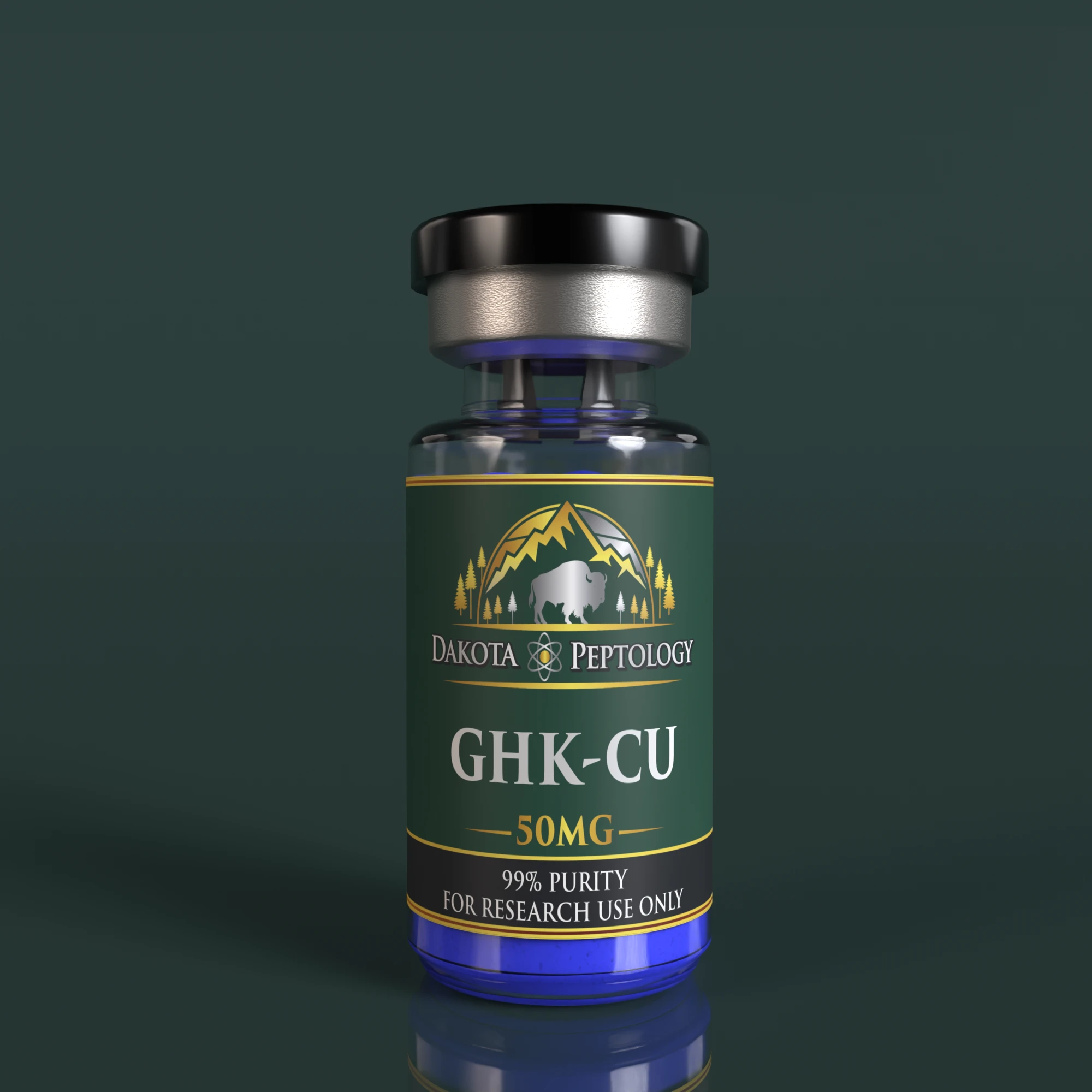
GHK-CU is a research-use-only peptide under investigation for potential applications in laboratory research contexts. This compound features the sequence Gly-His-Lys and copper chelation (Cu) as a research tool. Always intended for research use only in controlled laboratory settings.

Price range: $75.00 through $140.00

Satisfaction Guaranteed

Secure
Payment

Third-party
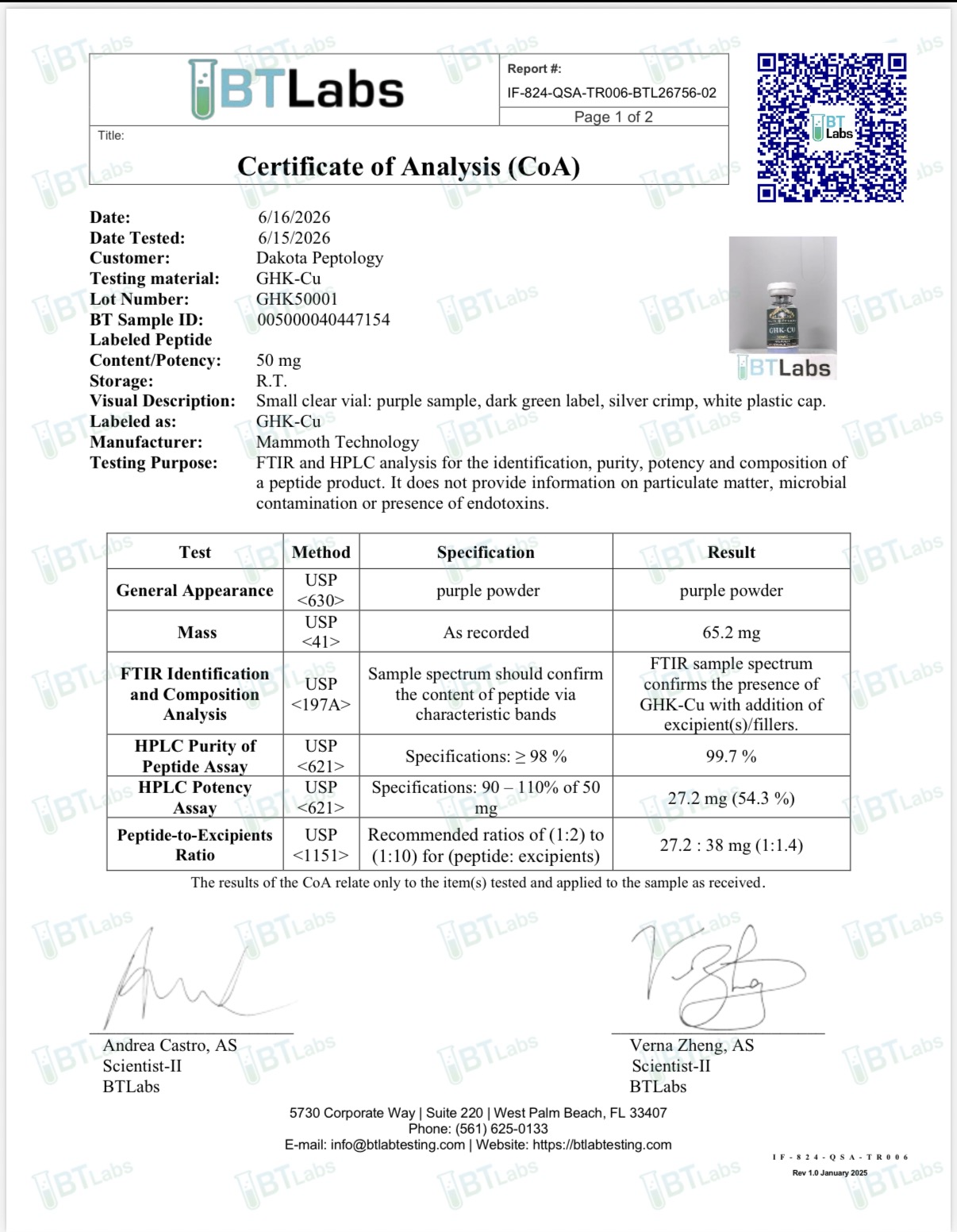
Tested

Research Use Disclaimer

Every serious peptide company prominently displays this. Example Research Use Only All products offered by Dakota Peptology are intended strictly for laboratory research purposes.

Research Use Disclaimer

Every serious peptide company prominently displays this. Example Research Use Only All products offered by TruPeptides are intended strictly for laboratory research purposes.


GHK-Cu

GHK-Cu (Glycyl-Histidyl-Lysine Copper Complex) is a peptide-based research compound known for its potential biological activity in cellular processes. This product is intended for use solely within academic, institutional, or scientific research environments to support experimental investigations.

GHK-Cu has been studied for its interactions with cellular membranes, extracellular matrix remodeling, and mitochondrial function, often explored in contexts involving wound healing, neurodegenerative research, and cellular aging models. Due to its chemical nature, it is utilized in preclinical settings to examine mechanisms of action in vitro and in vivo.

Research Overview

The GHK-Cu peptide was first identified in human plasma serum and has been extensively researched for its role in modulating cellular processes. Its copper coordination stabilizes the peptide structure, enhancing its bioavailability and interaction with target proteins and receptors. Research typically investigates its effects on fibroblast activity, matrix metalloproteinase (MMP) regulation, and oxidative stress responses.

Key Research Focus Areas

  • Wound Healing and Tissue Repair – Examining GHK-Cu’s influence on collagen synthesis, extracellular matrix deposition, and accelerated epithelialization in models of acute and chronic wounds.
  • Neurodegenerative Research – Exploring potential neuroprotective mechanisms, including its effects on mitochondrial integrity, protein aggregation, and synaptic plasticity in age-related or disease-induced models.
  • Extracellular Matrix Remodeling – Investigating its role in tissue regeneration, fibrosis, and inflammatory responses through modulation of MMP activity and cytoskeletal dynamics.
  • Antioxidant and Anti-Inflammatory Properties – Assessing its impact on oxidative stress markers, reactive oxygen species (ROS) clearance, and inflammatory cytokine signaling in experimental settings.
  • Cellular Proliferation and Differentiation – Observing its effects on stem cell activity, fibroblast differentiation, and tissue-specific lineage commitment in vitro.

Safety and Compliance

GHK-Cu is a synthetic peptide complex and must be handled with caution in research applications. While preclinical data suggest potential benefits in controlled experimental designs, no therapeutic claims are endorsed, and long-term or broad-scale exposure outside of research contexts remains untested. Storage should comply with peptide stability protocols (typically refrigerated at 2–8°C) to maintain structural integrity.

For research use only. Not for human or animal consumption. Always adhere to institutional guidelines for peptide safety, purity standards, and experimental ethical standards. Further research may be required to confirm safety and efficacy under specific conditions.

📚 Peer-Reviewed Study

GHK-Cu in Mice: Improved Cognition and Fewer Amyloid Plaques

Overview of the GHK-Cu Study

This study explored the GHK-Cu copper peptide for its neuroprotective properties against Alzheimer’s Disease (AD). Researchers investigated whether intranasal delivery of GHK-Cu could enhance cognition and reduce hallmark neuropathological changes in 5xFAD transgenic mice, a well-established model of early-onset AD.

Over a 12-week period, male and female mice received intranasal GHK-Cu three times per week. Results demonstrated that GHK-Cu treatment improved memory performance, reduced amyloid plaque burden, and decreased neuroinflammatory activity compared with saline-treated controls. These outcomes position GHK-Cu peptide as a promising candidate for further preclinical evaluation in neurodegenerative research.
Why GHK-Cu Is Being Studied for Alzheimer’s

The GHK-Cu peptide (glycyl-L-histidyl-L-lysine bound to copper) is a naturally occurring complex known for its regenerative, antioxidant, and anti-inflammatory functions. It supports angiogenesis, tissue repair, and the modulation of transforming growth factor beta 1 (TGFβ1) signaling—a pathway linked to amyloid plaque formation and tau pathology.

Prior GHK-Cu studies showed it improves cognitive function in aged animals and counteracts oxidative stress relevant to AD pathogenesis. Because GHK-Cu copper peptide can be delivered intranasally, bypassing the restrictive blood-brain barrier, this route was selected as an efficient and non-invasive way to achieve central nervous system exposure.

Experimental Design and Methodology

The study used both male and female 5xFAD transgenic mice, aged four months at the onset of testing. Mice were divided into GHK-Cu–treated and saline-treated groups, along with wild-type controls. The GHK-Cu peptide was administered intranasally at a dose of 15 mg/kg three times weekly for three months.

Cognitive function was measured using the Y-Maze spontaneous alternation test, a reliable indicator of working memory. Neuropathological assessments included Congo red staining for amyloid plaques and MCP-1 immunohistochemistry to evaluate neuroinflammation.

GHK-Cu Key Findings — Behavioral Improvements

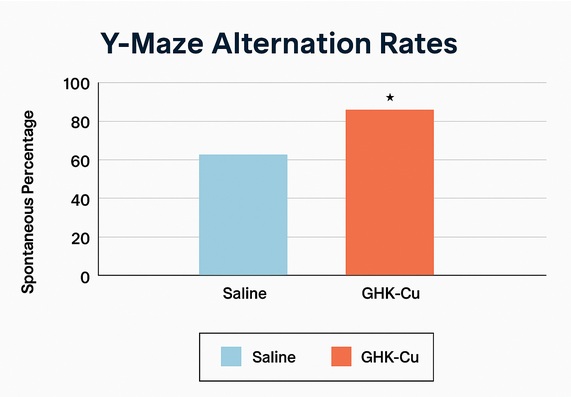
Treatment with intranasal GHK-Cu significantly enhanced performance in the Y-Maze test. Female mice exhibited notable gains in spontaneous alternation scores at weeks 8 and 12, while males showed earlier improvement beginning at week 4. By the end of the study, the GHK-Cu–treated mice performed nearly at the level of wild-type controls, suggesting substantial restoration of working memory and executive function.

These behavioral outcomes align with prior GHK-Cu studies demonstrating improved cognition following peptide exposure.

GHK-Cu effects Y-maze alternation test

GHK-Cu effect and improvement on Y-maze alternation rates, a key indicator of working memory

Reduction of Amyloid Plaques

Congo red staining revealed that GHK-Cu–treated transgenic mice displayed markedly fewer amyloid plaques in the frontal cortex, hippocampus, and thalamus compared with saline-treated counterparts. The plaques that did form were smaller, less dense, and less numerous.

These reductions indicate that intranasal GHK-Cu copper peptide not only mitigates amyloid accumulation but also potentially slows early neurodegenerative processes characteristic of AD pathology.

Decreased Neuroinflammation via MCP-1 Suppression

MCP-1 (monocyte chemoattractant protein-1) staining intensity—a biomarker of neuroinflammation—was significantly reduced in the frontal cortex and hippocampus of GHK-Cu–treated mice. Digital quantification confirmed lower optical density levels compared with saline-treated controls.

This indicates that GHK-Cu peptide effectively downregulated chemokine-related immune activation, supporting a more stable neuroinflammatory environment. The findings reinforce GHK-Cu’s multifaceted mechanism, including modulation of inflammatory and oxidative pathways.

The Role of Intranasal Administration

Intranasal delivery allowed direct access to the brain through the olfactory and trigeminal pathways, bypassing the blood-brain barrier. This method increased peptide uptake efficiency while maintaining low systemic copper levels, minimizing toxicity risks.

Researchers emphasized that this non-invasive route could serve as a model for other neuroactive synthetic peptides, providing a foundation for future translational studies on neurodegenerative conditions.

GHK-Cu Discussion and Implications

This GHK-Cu latest research underscores a broad therapeutic potential via three mechanisms: antioxidant protection, anti-inflammatory regulation, and amyloid plaque reduction. By attenuating multiple pathological pathways simultaneously, GHK-Cu contrasts with traditional single-target AD drugs.

The study’s outcomes suggest that GHK-Cu copper peptide could hold translational value as a neuroprotective therapy, though further testing in aged or tau-based models is warranted. The authors also highlight the safety of repeated intranasal use and encourage long-term studies assessing neurodegeneration and synaptic health.

Conclusion

Intranasal GHK-Cu copper peptide treatment improved cognitive performance, reduced amyloid plaque deposition, and decreased MCP-1–mediated neuroinflammation in 5xFAD mice over a 12-week study. The evidence supports its viability as a neuroprotective and cognitive-enhancing agent for Alzheimer’s research.

This GHK-Cu latest research demonstrates that bypassing the blood-brain barrier through intranasal delivery may represent a promising strategy for peptide-based therapies aimed at neurodegeneration.

Frequently Asked Questions (FAQ)

Does GHK Cu help with brain health or cognition?

In recent animal research, GHK-Cu peptide improved memory and cognitive function in mice with Alzheimer’s-like pathology. Treated animals showed enhanced performance in behavioral tests, such as the Y-maze, indicating improved working memory and restored neural function. These effects are attributed to GHK-Cu’s antioxidant, anti-inflammatory, and neuroprotective properties.

What are the results of the newest GHK Cu studies?

The GHK-Cu latest research in 5xFAD transgenic mice demonstrated that intranasal GHK-Cu significantly reduced amyloid plaque formation, lowered neuroinflammation markers, and improved cognitive outcomes. The findings suggest that GHK-Cu acts through multiple biological pathways to counteract Alzheimer’s-related degeneration.

How is GHK-Cu administered in animal trials?

In this study, researchers delivered GHK-Cu copper peptide intranasally at a dose of 15 mg/kg, three times per week for 12 weeks. The intranasal route was chosen for its ability to bypass the blood-brain barrier, allowing the peptide to reach brain tissue more effectively while minimizing systemic copper exposure.

What are the anti-inflammatory effects of GHK-Cu in Alzheimer’s models?

GHK-Cu reduced inflammation in the brain by decreasing MCP-1 (monocyte chemoattractant protein-1) staining intensity in the frontal cortex and hippocampus. This reduction indicates lower immune activation and diminished neuroinflammatory stress, which are critical in slowing Alzheimer’s progression.

What is the GHK-Cu peptide and how does it work?

The GHK-Cu peptide is a naturally occurring copper-binding tripeptide (glycyl-L-histidyl-L-lysine). In animal brains, it supports cellular repair, combats oxidative stress, and regulates inflammatory signaling pathways. Its copper-bound form (GHK-Cu) activates protective genes and suppresses those involved in tissue damage and neuroinflammation.

How does intranasal administration improve peptide delivery?

Intranasal administration enables direct access to the brain via the olfactory and trigeminal neural pathways, effectively bypassing the blood-brain barrier. This approach improves GHK-Cu peptide bioavailability in the central nervous system and avoids potential toxicity associated with systemic copper overload.

What were the key behavioral outcomes in the Y-maze test?

Mice treated with GHK-Cu copper peptide exhibited significantly higher spontaneous alternation percentages in the Y-maze, a measure of working memory. Males improved as early as week 4, while females showed strong gains by week 8, with both groups nearing the performance levels of healthy wild-type controls.

Can GHK-Cu reduce amyloid plaque accumulation?

Congo red staining revealed that GHK-Cu–treated mice had substantially fewer amyloid plaques across the frontal cortex, hippocampus, and thalamus. The plaques were smaller, less dense, and less numerous than in untreated mice, demonstrating the peptide’s potential to mitigate amyloid-related toxicity.

How is GHK-Cu copper peptide different from topical cosmetic formulations?

Topical GHK-Cu formulations are designed for skin regeneration and anti-aging, acting locally to stimulate collagen production and wound repair. In contrast, the GHK-Cu peptide used in neuroscience research is administered systemically at controlled doses to influence brain pathways and cognitive function—representing a completely different therapeutic application.

📚 Study Reference
Tucker M, Liao GY, Park JY, et al. Behavioral and neuropathological features of Alzheimer’s disease are attenuated in 5xFAD mice treated with intranasal GHK peptide. Preprint. bioRxiv. 2023;2023.11.20.567908. Published 2023 Nov 21. doi:10.1101/2023.11.20.567908


https://pubmed.ncbi.nlm.nih.gov/38045355/

Date Added :
05/18/2026

Related Peptides

Age Verification!

*By continuing, you confirm eligibility and legal compliance.