
Epithalon is a synthetic tetrapeptide derived from epithalamin, associated with cellular regulation and biological aging processes.
It has been studied for its role in cellular repair, circadian rhythm regulation, and metabolic efficiency.
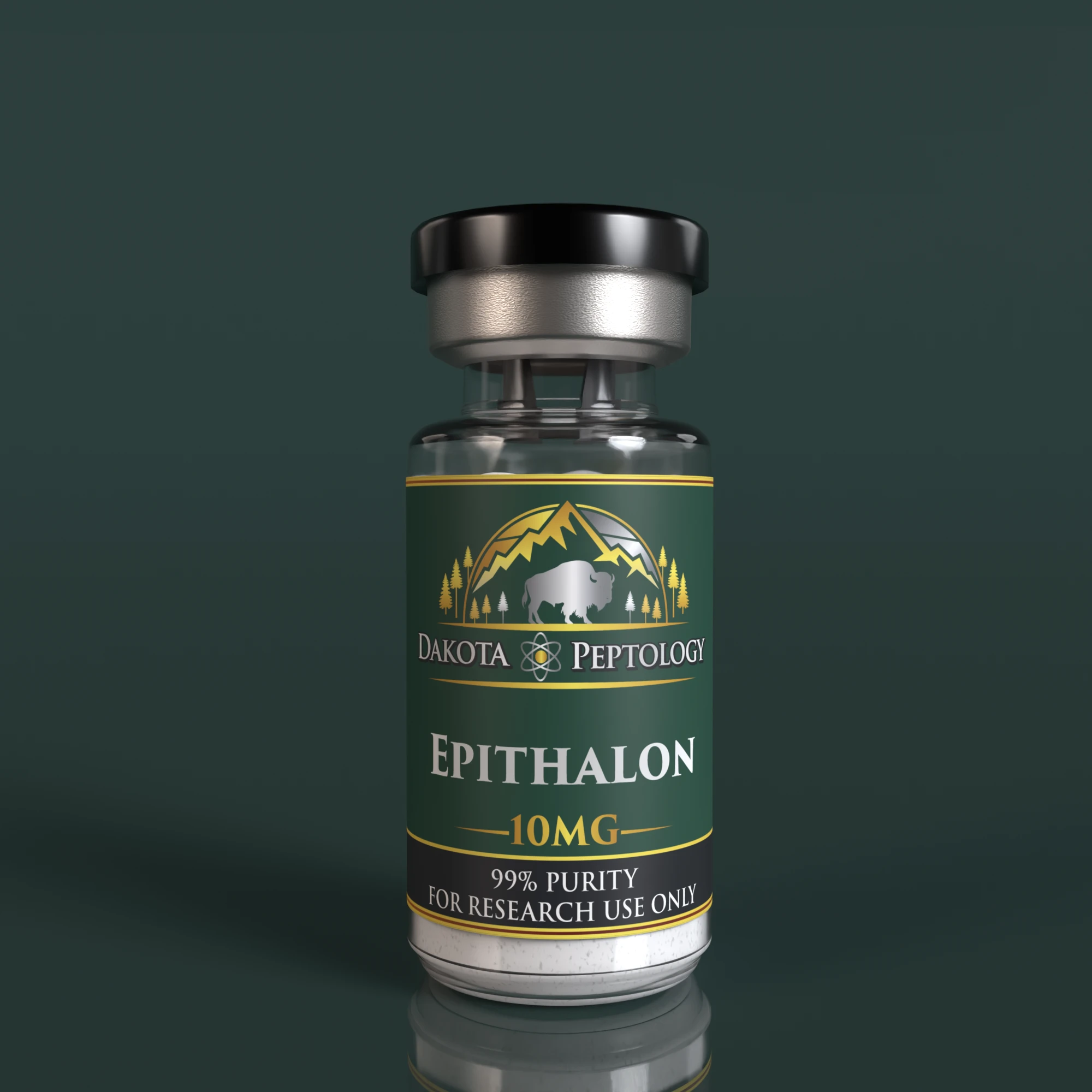
Epithalon is a synthetic peptide designed for research-use-only / laboratory-use applications. Structurally derived from telomerase-associated proteins, it has been studied for its potential impact on cellular longevity and stress resistance in controlled experimental settings. For research use only.
$69.95 – $239.95Price range: $69.95 through $239.95
Every serious peptide company prominently displays this. Example Research Use Only All products offered by Dakota Peptology are intended strictly for laboratory research purposes.
Every serious peptide company prominently displays this. Example Research Use Only All products offered by TruPeptides are intended strictly for laboratory research purposes.
Epithalon is a synthetic peptide derived from the human peptide defensin-1, which is believed to play a role in the regulation of telomerase activity. This research-use-only compound has garnered attention in the scientific community for its potential impact on cellular aging mechanisms, though its effects are still under investigation.
Epithalon has been studied primarily within the realm of aging research, focusing on its interaction with telomerase reverse transcriptase (TERT). Telomerase is an enzyme that maintains the length of telomeres, repetitive nucleotide sequences at the ends of chromosomes. Shortening of telomeres is associated with cellular senescence, a process linked to aging. The peptide appears to modulate telomerase activity in vitro, potentially influencing longevity-related pathways.
Early preclinical studies have explored Epithalon’s ability to influence telomere maintenance and cellular stress responses. Research has emphasized its potential role in mitigating oxidative damage and enhancing mitochondrial function, which are both critical factors in aging and age-related diseases. However, further in vivo studies are necessary to fully elucidate its mechanisms and applications in biological systems.
Epithalon is provided solely for academic, scientific, or research purposes. This material is intended for use in controlled laboratory settings by qualified researchers. Due to its specific biochemical properties, improper handling or use could pose risks to health and safety. This peptide must be handled with sterile techniques, and all procedures should comply with established biosafety protocols.
For research use only. Not for human or animal consumption.
Epithalon is a synthetic tetrapeptide derived from epithalamin, associated with cellular regulation and biological aging processes.
It has been studied for its role in cellular repair, circadian rhythm regulation, and metabolic efficiency.
The objective of this research was to evaluate whether Epithalon could influence cellular function, telomerase activity, and metabolic regulation.
Researchers explored its potential role in supporting energy balance and physiological efficiency.
Studies were conducted using both cellular models and animal research to evaluate telomerase activity and biological function.
Measurements included cellular lifespan, oxidative stress markers, and gene expression related to metabolic processes.
Epithalon demonstrated activation of telomerase and improved cellular lifespan in controlled studies.
These effects suggest enhanced cellular efficiency, which may support metabolic function and overall body composition.
Epithalon influences telomerase activity and gene expression linked to cellular repair and longevity.
It may also regulate circadian rhythms and melatonin production, which are closely tied to metabolic health and recovery cycles.
While not a direct fat-burning compound, Epithalon supports cellular and metabolic processes that influence energy balance.
It is often explored in research focused on recovery, metabolic efficiency, and long-term body composition regulation.
Epithalon demonstrated the ability to enhance cellular lifespan and biological efficiency in experimental models.
These findings support its relevance in metabolic and body composition research contexts.
Please select an option to view the COA certificate.

Rooted in the Midwest • Driven by Science