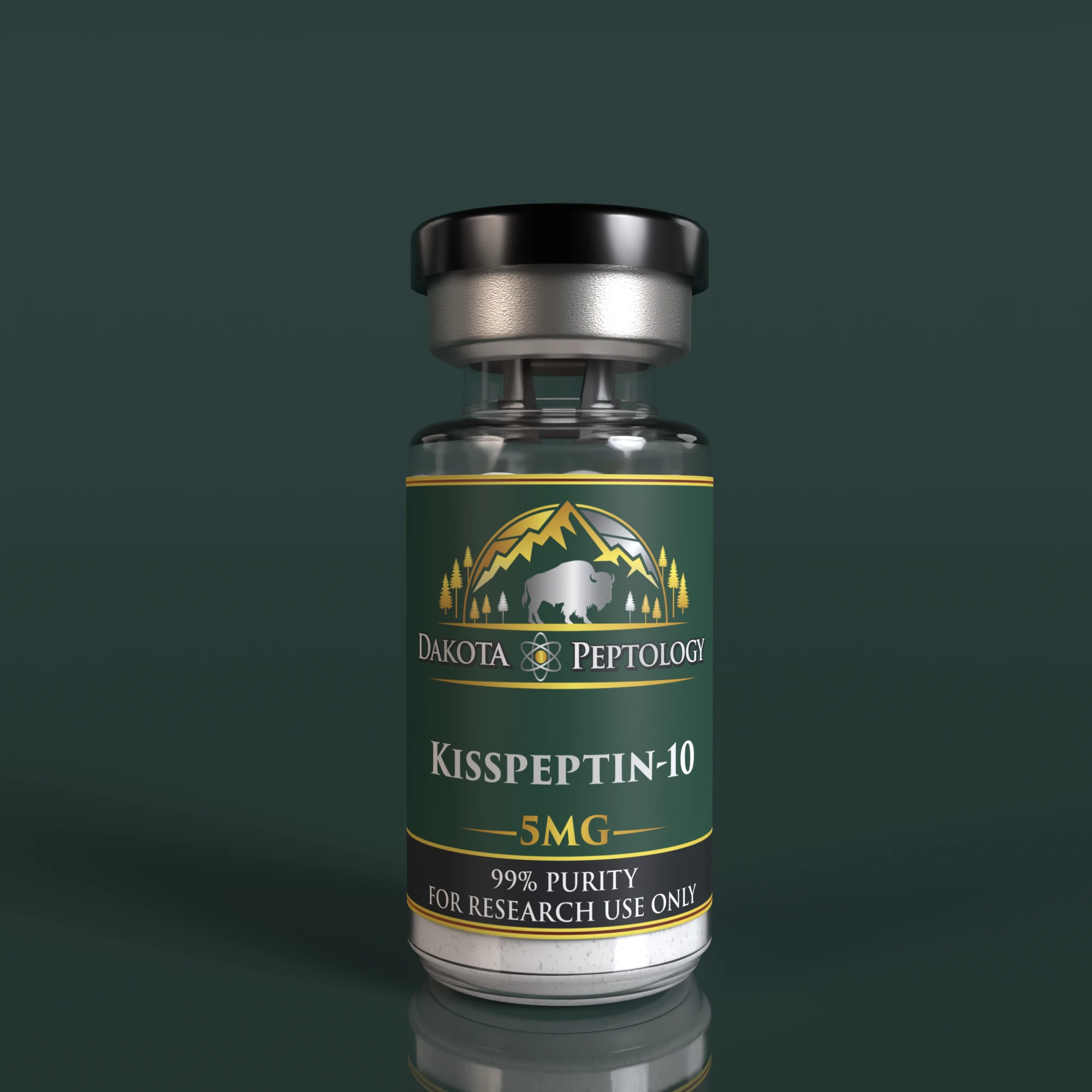
Kisspeptin-10
Kisspeptin-10 is a decapeptide derived from the kisspeptin-10/ GnRH co-secreted neuropeptide family. It plays a critical role in reproductive hormone regulation in mammals, particularly in modulating gonadotropin-releasing hormone (GnRH) secretion. Due to its precise role in endocrine function, Kisspeptin-10 has been extensively studied for its potential mechanisms in reproductive biology research.
Research Context
Kisspeptin-10 was first identified in 2001 and has since become a significant subject of study in reproductive endocrinology. Its primary function involves stimulating the release of luteinizing hormone (LH) and follicle-stimulating hormone (FSH) through interactions with GnRH neurons in the hypothalamus. This peptide has been found to be critical in the onset of puberty, ovulation, and the regulation of menstrual cycles in mammals.
Research Overview
Kisspeptin-10 functions as a potent modulator of GnRH secretion, influencing reproductive processes via its interaction with kisspeptin receptors (KISS1R). Research has primarily explored its role in reproductive physiology, including studies on reproductive aging, infertility, and reproductive disorders. Because of its specificity, Kisspeptin-10 serves as an important tool for dissecting the neural and hormonal mechanisms underlying reproductive functions.
Key Research Focus Areas
- Reproductive Endocrinology: Investigations into its role in the regulation of gonadotropin release, influencing pubertal development, ovulation, and fertility.
- Neuroendocrine Signaling: Examination of how Kisspeptin-10 modulates GnRH neurons and their downstream effects on reproductive hormone secretion.
- Aging and Reproductive Function: Studies exploring its potential impact on reproductive decline with age, including infertility and hormonal imbalance.
- Neurodegenerative Research: Preliminary investigations into its potential role in neural circuits affecting reproductive function and its relevance to neurodegenerative conditions.
- Pharmacological Applications: Research into potential therapeutic implications for conditions affecting reproductive hormone regulation, though these are purely speculative for non-clinical use.
Safety and Compliance
Kisspeptin-10 is supplied for research purposes only. Due to its biological activity and potential interactions with neuroendocrine systems, it should be handled with caution in accordance with established laboratory safety protocols. This peptide should not be administered to humans or animals. Only qualified researchers within academic or institutional research environments are authorized to use Kisspeptin-10. Proper documentation, regulatory compliance, and adherence to institutional review board (IRB) guidelines are mandatory for its use.
For research use only. Not for human or animal consumption.
📚 Peer-Reviewed Study
Kisspeptin-10 and Hormonal Regulation: Implications for Fat Loss and Metabolic Function
▼
Introduction to Kisspeptin-10
Kisspeptin-10 is a peptide fragment derived from the kisspeptin protein, known for its role in regulating the hypothalamic-pituitary-gonadal (HPG) axis.
It plays a key role in signaling pathways that influence hormone release, including gonadotropin-releasing hormone (GnRH).
Research Objective
The objective of this research was to evaluate how Kisspeptin-10 influences hormonal signaling and downstream metabolic processes.
Researchers examined its potential role in supporting hormonal balance and energy regulation.
Study Design and Methodology
Experimental studies evaluated Kisspeptin-10 in controlled settings to observe its effects on hormone release and endocrine signaling.
Measurements included changes in luteinizing hormone (LH), testosterone levels, and related metabolic markers.
Key Findings — Hormonal Activation and Metabolic Influence
Kisspeptin-10 demonstrated the ability to stimulate GnRH release, leading to increased downstream hormone production.
These hormonal changes are associated with metabolic processes that influence fat utilization and body composition.
Mechanisms of Action
Kisspeptin-10 binds to KISS1 receptors in the hypothalamus, triggering the release of GnRH.
This activation stimulates the endocrine cascade, influencing testosterone production and metabolic activity.
Implications for Fat Loss Research
While not a direct fat-burning compound, Kisspeptin-10 supports hormonal pathways that influence metabolism and energy balance.
It is explored in research focused on body composition, endocrine health, and performance-related metabolic regulation.
Conclusion
Kisspeptin-10 demonstrated significant effects on hormonal signaling pathways that regulate metabolism.
These findings support its relevance in research related to fat loss, hormonal balance, and body composition.
Frequently Asked Questions (FAQ)
What is Kisspeptin-10?
Kisspeptin-10 is a peptide involved in regulating hormone signaling through the hypothalamic-pituitary-gonadal axis.
Does it burn fat directly?
It is not a direct fat burner but may influence metabolic processes through hormonal regulation.
What were the main findings?
Studies showed increased hormone signaling, particularly involving GnRH and testosterone pathways.
How does it affect metabolism?
Hormonal balance plays a key role in energy utilization, fat distribution, and body composition.
Is this based on human studies?
Research includes experimental and controlled studies focused on endocrine signaling.
Why is this important?
It highlights the connection between hormonal regulation and metabolic performance.
📚 Study Reference
Research on Kisspeptin-10 and endocrine signaling pathways.