
NNMT influences NAD+ metabolism and cellular energy pathways, which play a key role in body composition, fat accumulation, and metabolic efficiency.
Pre Order Today To Secure Launch Pricing
COA Provided With Every Order
Research Quality Peptides
99%+ Purity Guaranteed
Pre Order Today To Secure Launch Pricing
COA Provided With Every Order
Research Quality Peptides
99%+ Purity Guaranteed
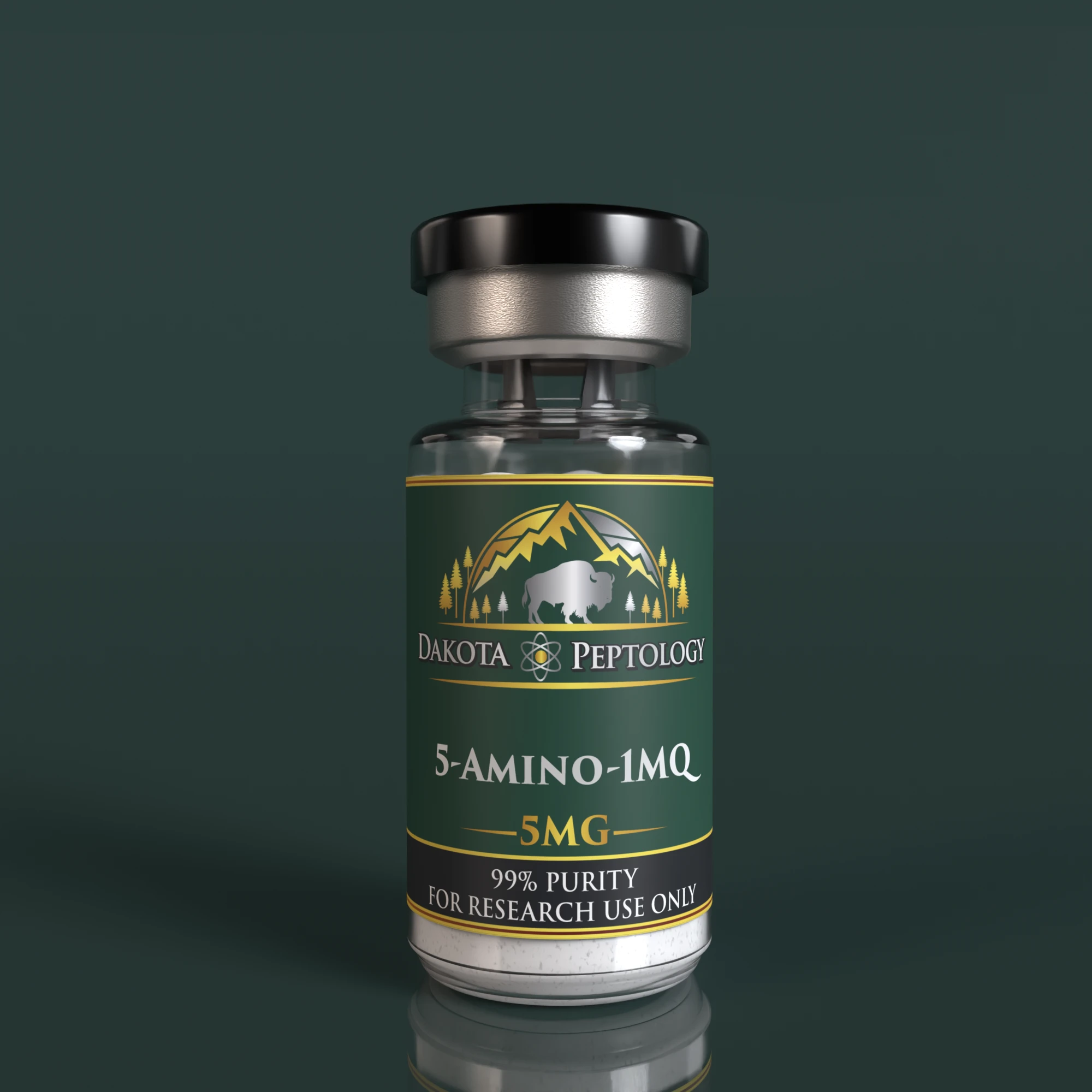
5-Amino-1MQ
Categories: Peptides, Weight Loss & Metabolic Optimization
5-Amino-1MQ is a research-use-only peptide under investigation in laboratory contexts for its potential functional properties. Structurally distinct, it is intended for academic and industrial research applications. For research use only.
$75.00 – $330.00Price range: $75.00 through $330.00
Satisfaction Guaranteed
Secure
Payment
Third-party
Tested
Research Use Disclaimer
Every serious peptide company prominently displays this. Example Research Use Only All products offered by Dakota Peptology are intended strictly for laboratory research purposes.
Research Use Disclaimer
Every serious peptide company prominently displays this. Example Research Use Only All products offered by TruPeptides are intended strictly for laboratory research purposes.
5-Amino-1MQ
5-Amino-1MQ is a novel synthetic peptide derivative designed for research applications within the field of neurochemistry, neuroprotection, and mitochondrial function studies. This molecule holds potential relevance in exploring mechanisms related to mitochondrial quality control, synaptic plasticity, and oxidative stress responses, often investigated in preclinical and basic science research settings.
Research Context
1MQ, a well-documented mitochondrial-targeting molecule, has been extensively studied for its role in modulating mitochondrial dynamics and protecting against mitochondrial dysfunction. The addition of an amino group at the 5th position of the molecule introduces structural modifications that may alter its binding affinity, stability, or pharmacokinetic properties in experimental models. Such modifications are critical in the exploration of enhanced specificity and efficacy in mitochondrial targeting mechanisms.
Research Overview
5-Amino-1MQ is positioned to advance research in areas where mitochondrial integrity plays a pivotal role, including neurodegenerative disease models, metabolic disorders, and aging studies. In preclinical studies, similar derivatives have demonstrated potential in enhancing mitochondrial membrane potential and reducing reactive oxygen species (ROS) generation, though these findings are preliminary and context-specific to experimental conditions.
Key Research Focus Areas
- Investigation of mitochondrial membrane dynamics and stability in various cellular models.
- Exploration of neuroprotective effects in models of neurodegeneration, such as Alzheimer’s or Parkinson’s disease.
- Assessment of mitochondrial function in metabolic and energy homeostasis studies.
- Evaluation of oxidative stress mitigation in experimental conditions.
- Analysis of peptide-membrane interactions and potential modifications to binding specificity.
Safety and Compliance Considerations
5-Amino-1MQ must be handled with caution in a laboratory setting due to its potential for toxicity in high concentrations or improper handling. All research involving this compound should adhere to strict biohazard protocols, including proper disposal of waste and adherence to institutional guidelines for chemical storage and use.
For research use only. Not for human or animal consumption.
📚 Peer-Reviewed Study
5-Amino-1MQ and NNMT Inhibition: Effects on Fat Loss, Energy Metabolism, and Body Composition
▼
📚 Peer-Reviewed Study
5-Amino-1MQ and NNMT Inhibition: Effects on Fat Loss, Energy Metabolism, and Body Composition
Introduction to 5-Amino-1MQ
5-Amino-1MQ is a small molecule inhibitor of nicotinamide N-methyltransferase (NNMT), an enzyme closely linked to metabolic regulation and fat storage.
Research Objective
The objective of this study was to evaluate whether inhibition of NNMT using 5-Amino-1MQ could support fat reduction, improve metabolic output, and influence body composition.
Researchers focused on its potential role in increasing energy expenditure and reducing adipose tissue.
Study Design and Methodology
Preclinical models were used to assess the metabolic effects of 5-Amino-1MQ over a controlled period.
Key measurements included fat mass, body weight changes, metabolic rate, and biochemical markers related to NAD+ activity and energy utilization.
Key Findings — Fat Loss and Energy Output
Results demonstrated a reduction in fat mass alongside increased energy expenditure in treated models.
These changes occurred without a decrease in caloric intake, suggesting improved metabolic efficiency rather than appetite suppression.
Mechanisms of Action
By inhibiting NNMT, 5-Amino-1MQ increases intracellular NAD+ levels, enhancing mitochondrial activity and energy metabolism.
This metabolic shift supports reduced fat storage and promotes higher energy utilization at the cellular level.
Implications for Body Composition Research
NNMT inhibition highlights a novel pathway for studying fat loss, metabolic performance, and energy balance.
5-Amino-1MQ is being explored as a research compound for understanding obesity, metabolic efficiency, and body composition optimization.
Conclusion
5-Amino-1MQ demonstrated the ability to influence fat reduction and enhance metabolic activity in preclinical settings.
These findings support further research into NNMT inhibition as a target for metabolic and body composition studies.
Frequently Asked Questions (FAQ)
What is 5-Amino-1MQ?
It is a research compound that inhibits NNMT, an enzyme involved in metabolism and fat storage regulation.
How does it relate to fat loss?
It may influence metabolic pathways that increase energy expenditure and reduce fat accumulation.
What were the main findings?
Studies showed reduced fat mass and improved metabolic efficiency in preclinical models.
Does it affect muscle or energy levels?
It may enhance cellular energy metabolism, which is important for overall performance and body composition research.
Is this based on human studies?
Most findings are based on preclinical research and should be interpreted within a laboratory context.
Why is this important?
It provides insight into metabolic pathways that regulate fat storage and energy balance.
📚 Study Reference
View peer-reviewed publication on metabolic regulation and NNMT inhibition.
Please select an option to view the COA certificate.
Related Peptides
Related products
-
Retatrutide
$80.00 – $200.00Price range: $80.00 through $200.00This product has multiple variants. The options may be chosen on the product page -
MOTS-C
$90.00 – $225.00Price range: $90.00 through $225.00This product has multiple variants. The options may be chosen on the product page -
Tesamorelin
$75.00 – $140.00Price range: $75.00 through $140.00This product has multiple variants. The options may be chosen on the product page -
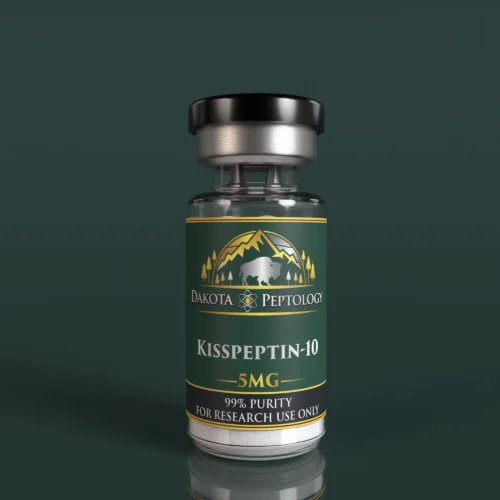
Kisspeptin-10
$60.00 – $100.00Price range: $60.00 through $100.00This product has multiple variants. The options may be chosen on the product page